Asian Banking School Logo

Overview

IN COLLABORATION WITH:
The Cambridge Summer School is a flagship programme of the Asian Banking School, delivered in collaboration with Cambridge Judge Business School Executive Education.
This long-standing collaboration reflects ABS’s commitment to providing world-class learning opportunities for the financial services industry. Cambridge Judge Business School is the business school of the University of Cambridge, one of the world’s leading universities and among the oldest and largest in the United Kingdom. Renowned for its tradition of academic excellence and global impact, the University of Cambridge has an undisputed reputation for outstanding achievement in education and research.

Designed especially for senior executives in financial-related sectors, this one-week programme is designed to equip banking leaders with the know-how to embrace the journey towards a successful and innovative organisation ready to compete in the future.

This programme aims to give invaluable insights into areas that banking leaders of today must face head-on as we head towards the new era. It provides leading-edge insights from research at the University of Cambridge, as well as methodologies and frameworks to help participants re-think how to lead the transformation of their organisation.
Programme Outline
Learning Outcomes
By the end of the programme, participants will be able to:

  1. Examine the banking digital landscape and develop a new model of strategy
  2. Display power and politics to initiate positive change and effective communication
  3. Understand stakeholder networks and influence mechanisms
  4. Explore a conceptual framework and core principles for fostering effective collaboration
  5. Reorganise time and modify movement patterns to fit special requirements
  6. Identify techniques for talent identification
  7. Formulate strategies and actionable plans to be integrated into their business
Programme Faculty
Programme Speakers
Lord Richard Wilson of Dinton
Former Secretary of the Cabinet and Head of the Home Civil Service; Former Master of Emmanuel College Cambridge
Lindsey Jayne
Lung Nien-Lee
Managing Director, Citi Country Officer (CCO), Singapore
Cambridge Judge Business School
Cambridge Judge Business School was established in 1990 as the Judge Institute of Management Studies, a focal point for management teaching and research in the University. The building housing the School is a refurbishment and extension of the old Addenbrooke's Hospital, first established on the site in 1766. In 1991, generous benefactions from Sir Paul and Lady Judge, together with the Monument Trust, provided the funds for the construction of a building for the newly formed School. The project was completed in August 1995 and officially opened by Her Majesty Queen Elizabeth II.

In 2018, the School opened their new Simon Sainsbury Centre, a four-storey, 5,000-square-metre structure that greatly expanded lecture, breakout rooms, meeting and dining facilities while uniting the School's activities under one roof. The Centre, designed by Stirling Prize-winning architect Stanton Williams, sits just behind the School's iconic Addenbrooke's building on Trumpington Street.

The Simon Sainsbury Centre is the programme venue for the Cambridge Summer School Programme. With its modern facilities and air-conditioned classrooms, the Centre provides a conducive environment for learning especially during warm summer days.
Hilton Cambridge City Centre
Hilton Cambridge City Centre offers a comfortable stay in the heart of Cambridge, surrounded by the city’s rich academic heritage and historic landmarks. Located on Downing Street and connected to the Grand Arcade, the hotel places participants within easy reach of the University of Cambridge colleges, King’s College Chapel, Cambridge Market Square, the River Cam, and the Fitzwilliam Museum.

Hilton Cambridge City Centre, 20 Downing Street, Cambridge CB2 3DT, UK
Accommodation
Accommodation will be provided from 26 July to 1 August 2026 at Hilton Cambridge City Centre, with daily serviced en-suite rooms featuring modern bathrooms, toiletries, a welcome tray, television, and Wi-Fi.
Pre-Programme: Guided Tour of Cambridge & Punting
There will be a guided tour of Cambridge and punting on the River Cam, which is one of the most traditional activities of Cambridge University.
WELCOME DINNER VENUE
Gonville & Caius College
Gonville & Caius College, commonly referred to as just Caius (pronounced 'keys'), is the fourth oldest College in the University of Cambridge. The College was first founded as Gonville Hall by Edmund Gonville in 1348, and refounded in 1557 by John Caius as Gonville and Caius College. One of its more notable alumni is Stephen Hawking.
FAREWELL DINNER VENUE
Trinity Hall
A historic view of Trinity Hall, one of Cambridge’s oldest colleges, founded in 1350 and known for its centuries-old academic heritage and beautiful riverside setting.
Note: All information on this page is correct but may be subject to change. Please contact or email us to get the latest version if there is any.
SHARE
Other programmes
Invest in a lifelong learning journey
As the industry’s preferred partner in learning and development, ABS offers customised and open enrolment training programmes that cover a comprehensive list of banking areas.
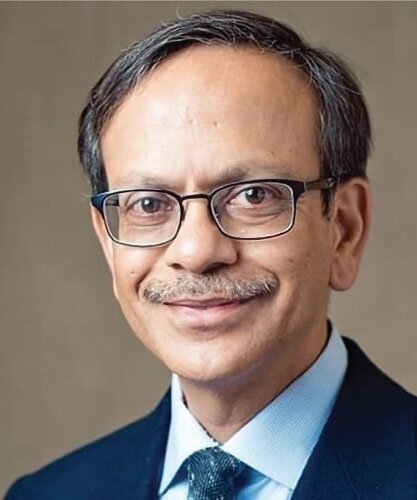
Professor Kishore Sengupta
Professor of Operations Management;
Academic Programme Director, Cambridge Summer School Programme
Senior Member and Fellow of Hughes Hall
MBA, PhD (Case Western University)

My research interests include managing complex projects, managing complexity in organisations, and the future of work in the age of technological discontinuity. I’ve served as advisor on several projects with the US Government Department of Defense and NASA and have consulted with organisations in Silicon Valley and Hong Kong. I’m a member of the Operations and Technology Management subject group at Cambridge Judge Business School, which focuses on practice-based research through partner organisations to address a wide spectrum of management challenges.
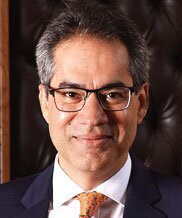
Professor Kamal Munir
Professor of Strategy & Policy
Pro-Vice-Chancellor (University Community and Engagement)
Professorial Fellow of Homerton College
PhD (McGill University)

My research interests include institutional change and stasis, a subject on which I have published many papers. I am also interested in strategy in highly turbulent and disruptive competitive environments, positioning in ecosystems, platform-based strategy, business models, economic development and national competitiveness. I have served as a consultant to several blue-chip organisations as well as to the World Bank and Asian Development Bank, among others. I’m a member of the Strategy and International Business subject group at Cambridge Judge Business School, and along with my colleagues I actively contribute to both academic and business communities.
Dr Patrizia Vecchi
Assistant Professor in Organisational Behaviour
BA (University of Modena), MS, PhD (Washington University in St Louis)

My research interests include interpersonal relationships in organisations, social networks, interpersonal cognition, and teamwork. I’ve taught professionals and executives around the world in topics such as negotiation, and power and politics. I’m the Academic Programme Director for the Cambridge Rising Women Leaders Programme. I’m part of the Organisational Behaviour subject group at Cambridge Judge Business School, which aspires to promote our understanding of behaviour within organisations and translate our scientific research into practical applications.
Professor Andrei Kirilenko
Professor of Finance
Director of the Doctoral Programme
Founding Director of the Cambridge Centre for Finance, Technology & Regulation (CCFTR)
PhD (University of Pennsylvania)

My research interests include the intersection of finance, technology, and regulation, fintech, asset pricing, data, digital technologies, and the design of automated financial markets. I previously served as Chief Economist of the US Commodity Futures Trading Commission (CFTC), where I used modern analytical tools and methods to design and enforce an effective regulatory regime of financial markets. I’m a member of the Finance subject group at Cambridge Judge Business School, which focuses on the investment and financial decisions of institutions.
Dr Philip Stiles
Associate Professor in Corporate Governance
Co-Director of the Centre for International Human Resource Management (CIHRM)
BA (University of Kent), MPhil, PhD (University of London)

My research interests include human resource management, leadership, high performance working, organisational culture, change management, corporate governance, the dynamics of boards of directors, chief executive succession, and the influence of emotions such as guilt on work motivation. I developed the Global Human Resource Research Alliance, a research group involving 30 companies worldwide. I’m a member of the Organisational Theory and Information Systems subject group at Cambridge Judge Business School, which is engaged with cross-disciplinary themes including leadership.
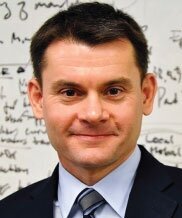
Mark Bloomfield
Fellow, Cambridge Judge Business School
Former Director of Commercial Transformation at Global Media & Entertainment
BSc (Kings College London), PhD (University of Bristol)

As a Fellow at Cambridge Judge Business School, he works with organisations and business leaders in the fields of innovation and sustainability. Dr Mark Bloomfield, the founder of Turbulence, supports organisations in accelerating their transformation journey and helps organisations develop future-facing innovation strategies, notably using AI. Before this, Mark served as the Director of Commercial Transformation and Innovation at Global Media & Entertainment for more than 10 years. He also held the role of Head of Operations Research at the Thomas Cook Group. Mark earned his PhD in Aerospace Engineering from the University of Bristol, in partnership with Airbus, and offers his expertise as an advisor to start-ups across diverse sectors.

As Director of RM, Mark is responsible for three teams; Data Science (DS), Optimisation & Pricing. The DS team lead projects in forecasting, scenario planning & segmentation. The optimisation team seeks to maximise the commercial potential of our assets. Additionally, the pricing team are accountable for yield protection and negotiation strategies. Mark leads a number of strategic projects including systems design and implementation. More recently, Mark’s focus has been on M&A and the launch of OKRs & Design Thinking across the Commercial division. Mark works closely with a number of universities, supporting master’s and PhD projects.
Lord Richard Wilson of Dinton
Former Secretary of the Cabinet and Head of the Home Civil Service;
Former Master of Emmanuel College Cambridge
Richard Wilson was born in Glamorgan and educated at Radley (1956-1960) and Clare College Cambridge (1961-1965). He was called to the Bar but, rather than practice, entered the Civil Service as an assistant principal in the Board of Trade in 1966.
 
He subsequently served in a number of departments including 12 years in the Department of Energy where his responsibilities included nuclear power policy, the privatisation of Britoil, personnel and finance. He headed the Economic Secretariat in the Cabinet Office under Mrs Thatcher from 1987-90 and after two years in the Treasury was appointed Permanent Secretary of the Department of the Environment in 1992. He became Permanent Under Secretary of the Home Office in 1994 and Secretary of the Cabinet and Head of the Home Civil Service in January 1998. He was Master of Emmanuel College Cambridge from 2002-2012 and holds a number of other non-executive appointments in the charitable and private sectors. He has been non-executive chairman of C Hoare & Co, the private bank, since 2006.
Lindsey Jayne
Lindsey Jayne is the former Chief Product Officer at the Financial Times (FT), where she led a large team of product professionals responsible for evolving and diversifying the FT’s digital portfolio. Her work has focused on innovation in how readers access and interact with content, including early experiments with generative AI such as AskFT, which allows subscribers to query FT journalism and receive synthesized insights. She has become a leading voice on the opportunities and challenges of bringing AI into media, balancing editorial integrity with new technology.

Lindsey’s career path has been unconventional. She left university early to work as cabin crew, later moving into public service with the UK’s Government Digital Service, where she was part of the early team behind GOV.UK. She went on to hold senior roles at Farfetch, the global fashion platform, and at Monzo, where she oversaw product during a period of rapid scale, guiding the company from one to three million customers.

Alongside her executive roles, Lindsey has co-founded a product leadership coaching practice and is active in the wider product community, sharing lessons on scaling teams, building strategy, and navigating disruption. Her career reflects a consistent focus on service, innovation, and helping organizations adapt to change.
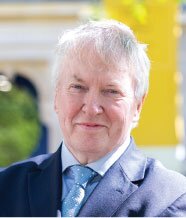
Lung Nien-Lee
Managing Director, Citi Country Officer (CCO), Singapore
As CCO, Lung oversees all Citi businesses and operations in Singapore, driving franchise performance, managing key regulatory relationships, and ensuring a robust risk and control environment.
 
Prior to his current position, Lung served as Chairman of Citi Private Bank for Asia South. Before joining the Private Bank, Lung was the CEO of Citibank Malaysia for six years. Lung held other key roles in the bank including anti-money laundering, global capital markets, and credit management.

In addition to his banking career, Lung holds several board positions, including membership on the World Motorsports Council of the Fédération Internationale de l'Automobile (FIA), as well as advisory roles at Singapore Management University and the board of management at Anglo Chinese (Independent) School. He is also involved with various charitable organizations.

Lung is a qualified Chartered Banker (Fellow) and earned his Bachelor of Business Administration from Chaminade University.
Sunday, 26 July 2026
Programme at a glance
Arrival in Cambridge
Guided Tour of Cambridge & Punting
Free Time
Programme OUTLINE
Pre-Programme : Guided Tour of Cambridge & Punting
There will be a guided tour of Cambridge and punting on the River Cam, which is one of the most traditional activities of Cambridge University.
Monday, 27 July 2026
Programme at a glance
Welcome Session
Strategic Perspectives on Banking Digital Futures
Lunch
Politics & Power
Welcome Dinner
Programme OUTLINE
Morning Session:
Strategic Perspectives on Banking Digital Futures
We are living in an era where industry boundaries have virtually disappeared. Age old businesses like banks are facing competition not from within the industry but without, often from small digital start-ups with no experience in banking or even finance. Analysing and responding to such threats or taking advantage of such situations requires discarding many existing models of strategy and coming up with new ones. In this session, participants will discuss how incumbents can respond to such threats and new entrants can exploit such opportunities. We will discuss a new model of strategy that provides a clear and powerful framework to think about strategy in the 21st century.
Afternoon Session:
Power and Politics
This session focuses on the factors necessary for one to be able to have an impact on an organisation. This 'informal leadership' is a critical determinant of one's ability to initiate positive change, secure cooperation, and experience career success. Many talented people miss out on opportunities for impact and achievement because they lacked sensitivity and skill in this area. We will develop an understanding of power, politics, and influence by considering the career of Margaret Thatcher, former Prime Minister of Great Britain.

The career of Lady Thatcher illustrates, in a very dynamic way, the development of one's power base during every stage of a career and the skills necessary to build consensus in highly political situations. Thatcher was so successful that it was said she had both Ronald Reagan and Mikhail Gorbachev – the leaders of the USA and USSR – wrapped around her little finger. We will draw lessons in power and politics from this case that are relevant and can be applied to any organisational context.
Tuesday, 28 July 2026
Programme at a glance
Effective Collaboration
Lunch
Digital Finance
Keynote Talk Guest Speaker: Attributes for Success
Free Time
Programme OUTLINE
Morning Session:
Effective Collaboration
In today’s complex organisations, cross-functional collaboration is essential for achieving high performance and ambitious objectives. However, effective collaboration requires more than just teamwork – it demands coordination across boundaries, adaptability to changing conditions, and a deep understanding of both the challenges and enablers of collaboration in everyday work environments.

This session provides participants with key insights into the fundamental drivers of collaboration in complex organisations. Through interactive group discussions and exercises, participants will explore a conceptual framework and core principles for fostering effective collaboration. They will then apply this framework to their own organisational context, gaining practical strategies to enhance teamwork and coordination.

Once the framework is established, the session shifts focus to identifying and addressing common barriers to collaboration, as well as the key enablers that drive success. Using real-world scenarios and hands-on exercises, participants will develop actionable strategies to overcome challenges and strengthen collaboration within their teams.

The session concludes with a structured action plan, equipping participants with clear, implementable steps to apply their learnings beyond the programme.
Afternoon Session:
Digital Finance
This session aims to introduce participants to the key digital technologies underlying the rise of fintech and showcase how these technologies change money, banking, and asset management, as well as to explain how to best operationalise digital technologies and manage risks that they bring.
Keynote Speaker: Mr Lung Nien Lee
Join us for an inspiring and insightful talk as Lung Nien Lee shares his journey through the banking industry, highlighting the essential attributes that have contributed to his success. This session will focus on key traits such as resilience, self-awareness, authenticity, and integrity, and how they play a vital role in both personal and professional growth.

Attendees will have the opportunity to ask questions, share their own experiences, and engage in discussions about their journeys and the challenges they face.

Participants will leave with a deeper understanding of the attributes necessary for success, actionable strategies for personal growth, and inspiration to cultivate these qualities in themselves and others. Join us to embark on a journey of self-discovery and empowerment!
Wednesday, 29 July 2026
Programme at a glance
Time: A Systemic Perspective
Lunch
AI in the Financial Sector
Keynote Talk Guest Speaker: AI in practice
Free Time
Programme OUTLINE
Morning Session:
Time: A Systematic Perspective
We live in a world of time scarcity. This problem has reached unsustainable levels in today’s information-rich and interrupt-driven environments. The pandemic has aggravated it by blurring work-life boundaries. The situation is particularly acute for professionals in mid- to senior-levels who are tugged between competing demands for time and attention: immediate vs. longer-term, acquiring vs. delivering work, or attending to crisis vs. focusing on business as usual. Demands on their time are frequently unplanned, even when not stemming from crisis.

The session starts by articulating and instantiating two basic principles regarding the use of time: all commitments of time draw from the same source, and therefore, they are connected systematically. Through a sense of exercise, participants understand the four archetypal ways in which they make time commitments. Many commitments, which initially seem reasonable, become dysfunctional when viewed from a broader systemic perspective, hindering individuals from making more effective "investments" of time and sometimes leading to disastrous consequences for their health, work, and personal lives. Participants work on their priorities and leave with a clear plan on how to manage their time.
Afternoon Session:
AI in the Financial Sector
Explore the rapid evolution of generative AI in our immersive workshop. We'll delve beyond ChatGPT, integrating a suite of generative AI technologies to tackle real-world challenges. This session covers a broad spectrum of generative AI data types, from text to sound, and from imagery to video. We use a hands-on approach to uncover the potential, probe the boundaries, and spark discussions on the strategic deployment of generative AI within your organisation.

  • Develop a widened perspective of utilising generative AI within the organisation.
  • Hands-on practice building generative AI solutions to real world problems.
  • Understand the role and impact of prompt engineering.
  • Assess the limitations and issues surrounding the use of generative AI in your context.
Keynote Speaker – AI in practice: Lindsey Jayne
Lindsey Jayne is the former Chief Product Officer at the Financial Times (FT), where she led a large team of product professionals responsible for evolving and diversifying the FT’s digital portfolio. Her work has focused on innovation in how readers access and interact with content, including early experiments with generative AI such as AskFT, which allows subscribers to query FT journalism and receive synthesised insights. She has become a leading voice on the opportunities and challenges of bringing AI into media, balancing editorial integrity with new technology.

Lindsey’s career path has been unconventional. She left university early to work as cabin crew, later moving into public service with the UK’s Government Digital Service, where she was part of the early team behind GOV.UK. She went on to hold senior roles at Farfetch, the global fashion platform, and at Monzo, where she oversaw products during a period of rapid scale, guiding the company from one to three million customers.

Alongside her executive roles, Lindsey has co-founded a product leadership coaching practice and is active in the wider product community, sharing lessons on scaling teams, building strategy, and navigating disruption. Her career reflects a consistent focus on service, innovation, and helping organisations adapt to change.

Thursday, 30 July 2026
Programme at a glance
Stakeholder Management
Lunch
Organisational Advantage
Farewell Dinner
Programme OUTLINE
Morning Session:
Stakeholder Management
Most major initiatives are significantly influenced by stakeholders who cannot be directly controlled. Managing stakeholders effectively is perhaps the most frequent – and most challenging – task of leaders. The session focuses on two aspects of stakeholder management: influence processes and personal factors.

The learnings of the session are crafted through a simulation wherein participants manage a set of stakeholders to create an exploitation plan for a copper mine. Participants understand through a debrief about the extent to which their actions were effective. The session then connects the debriefs with highly actionable frameworks on influences mechanisms and personal factors. We conclude with a five-step plan for managing stakeholders.

Objectives
  • Understand stakeholder networks and influence mechanisms
  • Understand how personal factors matter in managing stakeholders
  • Formulate a plan for managing stakeholders
Afternoon Session:
Organisational Advantage
In many parts of the world, the pattern and mode of work has seen enormous change in recent years, and the adoption of remote, hybrid and flexible working in the new normal. But like the old normal, no one seems very happy. The context for leadership has itself been disrupted, and in a radically new era of work, organisations require a different type of leadership – one that unites, transforms and elevates performance. With employee engagement, productivity and personal ties on the wane, leaders urgently need to refocus on harnessing relationships, making their organisations more humane, and finding new ways to engage and unleash talent.

By the end of the session, we will have met the following learning objectives:
  • Considered some of the dynamics changing the mode and nature of working and leading
  • Explored the idea of “social capital” and its application in organisations
  • Re-thought their own role and approach in winning the hearts and minds of multi-generational employees.

Pre-programme materials – Please read “The Organisational Advantage” by John Dore.
Friday, 31 July 2026
Programme at a glance
Talent Management
Lunch
Integration
Future Plan
Certification Ceremony
Close of Programme
Programme OUTLINE
Morning Session:
Talent Management
Spotting and nurturing talent is at the heart of people management, but what is excellent practice in this crucial area, and why are some organisations so much better than others in achieving a high talent organisation? Ensuring that the right people are within the organisation is a critical role in people management. We explore the key elements of strategic staffing, centrally involving how the recruitment and selection of individuals support the basic philosophy of the organisation.

We look at the major levers in ways to ensure higher retention. How employees are socialised once they have entered the organisation will also be examined. We will look too at how to move people up from indifference and disengagement to full engagement and higher commitment.

A second theme is performance management. We explore the key processes of goal setting and appraisal and rewards, and the underlying motivational theories behind them.

The third theme we cover is development. Effective management of development is also important to motivate the best talent and to ensure that the organisation revitalises itself. In this session, we examine the major levers by which organisations retain and develop their talent.

Session Takeaways:
  1. We identify techniques for talent identification
  2. We identify the performance equation and how to deliver on it
  3. We examine how to develop your own and others’ development through the “crucible event”

Session Outcomes:
  1. To understand how talent drives the delivery of an organisation’s strategy
  2. To develop an awareness of the linkages between talent, performance management, and development
  3. To provide a range of models and examples that show the implementation of talent approaches
Afternoon Session:
Integration
This session will consolidate the key insights, concepts, and frameworks explored throughout the week. It is designed to help participants reflect on their learnings and identify actionable takeaways that can be effectively integrated into their business strategies and agendas.
Asian Banking School Logo
The Asian Banking School (ABS) is dedicated to developing talent and is the largest specialised provider of quality banking training programmes in the ASEAN region.
Copyright © Asian Banking School (ABS) (201201039737 (1024215-T)). All rights reserved.
There are currently no upcoming programme slots.
Please email us here or call us at +603 2701 7822 if you want to check on future slots.


 | 
Asian Banking School
Cambridge Summer School Programme
Time Slot
PAX No
Programme Fees


Note ON CURRENCY CONVERSION in IPAY88 Payment Gateway
Please take note that this amount will be reflected in Malaysian Ringgit (MYR) in the iPay88 Payment Gateway based on the daily foreign currency exchange rate.
Note for offline payment Method
Kindly download the Payment Form here for our banking details and if making company sponsored payments. You are required to upload this form to complete the registration process.
Programme added to cart successfully.

Please proceed to your cart to enter participant details and complete payment.

Text
Note for offline payment Method
Kindly download the Payment Form here for our banking details and if making company sponsored payments. You are required to upload this form to complete the registration process.
Failed to add programme to cart.

Please refresh the page and try again.

Ooops!
Generic Popup2