Asian Banking School Logo

Overview

IN COLLABORATION WITH:
Bank Digital Transformation, FinTech Innovation and AI
The programme is anchored on a central premise: digital transformation in banking is no longer defined by technology adoption alone, but by how effectively leaders integrate artificial intelligence into decision-making, governance, and enterprise-wide execution.

As generative AI reshapes global capital flows and financial operating models, senior banking leaders face a fundamentally different challenge from earlier phases of transformation. Artificial intelligence is now embedded across core banking functions, including credit assessment, risk management, compliance, customer engagement, and sustainability analysis. This shift requires leaders to move beyond functional execution and exercise judgment across interconnected, data-driven systems where speed, scale, and accountability must be balanced.

China provides a compelling reference point for this transition. Its financial institutions and leading TechFin and FinTech companies have demonstrated how AI can be deeply integrated into lending, risk evaluation, customer ecosystems, and operational decision-making. These organisations illustrate how digital transformation can be executed at scale under conditions of technological disruption, regulatory intensity, and market volatility. The programme draws from these experiences to examine how leadership discipline, governance alignment, and organisational design enable sustained performance.

A key feature of the programme is its hands-on and experiential approach. Participants will apply AI tools directly to real banking scenarios, including credit analysis, risk identification, compliance review, ESG assessment, and management reporting. In parallel, site visits and engagement with leading Chinese enterprises provide direct exposure to how strategy is translated into execution, allowing participants to observe leadership trade-offs between innovation and control, speed and governance, and automation and accountability.

The programme also incorporates lessons for senior bankers on cross-border financial integration, drawing from the Hong Kong–Guangdong experience. Participants will examine how regulatory coordination, digital infrastructure, and AI-enabled risk management support capital mobility, ESG-aligned financing, and institutional trust across jurisdictions. These insights are directly contextualised for Malaysia and Singapore, particularly in relation to emerging regional integration initiatives.

In addition, the programme addresses the growing importance of systemic resilience and resolution leadership in an AI-enabled financial system. As risks increasingly arise from digital concentration, data interconnectivity, and rapid asset repricing, leaders must strengthen their ability to anticipate vulnerabilities, exercise disciplined decision-making, and embed recovery and resolution thinking into strategic governance.

The focus throughout is practical and leadership oriented. Participants will leave with the capability to apply AI with discipline, extract relevant lessons from leading global models, and lead transformation while maintaining governance, resilience, and long-term institutional credibility.
Programme Outline
Learning Outcomes
At the end of the programme, participants will be able to:
  • Distinguish the development trends of FinTech, digital banking, and artificial intelligence, and evaluate their combined impact on banking strategy, operating models, and competitive positioning
  • Apply artificial intelligence in core banking functions to enhance credit assessment, risk identification, compliance review, customer engagement, and sustainability analysis, while improving operational efficiency and decision quality
  • Integrate AI and FinTech capabilities into strategic planning, enabling business innovation, digital transformation, and stronger alignment between technology, governance, and organisational execution
  • Evaluate China’s role in the global macroeconomy and digital financial ecosystem, and assess how leading Chinese TechFin and FinTech models influence banking practices and strategic direction
  • Translate lessons from leading Chinese enterprises and site visits into practical leadership approaches, particularly in areas of governance discipline, organisational resilience, and execution under conditions of scale and complexity
  • Integrate cross-border financial insights from the Hong Kong–Guangdong experience, and assess implications for Malaysia and Singapore in areas such as regulatory coordination, capital mobility, fintech infrastructure, and AI-enabled risk management
  • Strengthen leadership capability in managing systemic risk and institutional resilience, including the application of recovery and resolution principles in an AI-enabled financial system
Programme Faculty
Tsinghua University, located in northwest Beijing, was established in 1911 under various names, including "Tsing Hua Imperial College" and "National Tsing Hua University".
The University's faculty valued the interaction between Chinese and Western cultures, sciences, and humanities. In 1937, National Tsing Hua University, National Peking University, and Nankai University merged to form Lin-shih-ta-hsueh, which was renamed the National South-West Associated University in 1938. In 1946, the University was moved back to its original location in Beijing.

Since 1978, Tsinghua University has grown into a comprehensive research university with 22 schools and 59 departments. Its motto is "Self-discipline and Social Commitment" and the spirit of "Actions Speak Louder Than Words." Tsinghua University is dedicated to cultivating global citizens who will thrive in today's world and become tomorrow's leaders.

In 2016, Tsinghua University launched its global strategy, aiming to foster innovative talents with global competence, serve China and the world through research, and strengthen its institutional competitiveness and global impact. The University has established new global institutions, initiated four university alliances, and formulated its Global Strategy 2030 in 2021 to enhance international exchange and cooperation.
ACADEMIC SUPPORT
School of Continuing Education, Tsinghua University

The School of Continuing Education at Tsinghua University was established in 1985 and is the first continuing education school among Chinese universities, approved by the Ministry of Education.

The school actively aligns with national strategic needs, focusing on the fundamental task of cultivating well-rounded talent. It implements Tsinghua University's educational philosophy of value shaping, capability training, and knowledge imparting. Leveraging Tsinghua's distinguished faculty, robust research capabilities, and extensive international influence, the school integrates high-quality educational resources from both domestic and international sources to deliver high-level, high-standard, and high-quality continuing education. It promotes integrated teaching and actively explores innovative digital teaching models.
PROGRAMME VENUE
Tsinghua University offers a world-class learning environment that blends its rich academic heritage with state-of-the-art educational facilities. Participants will attend classes in modern, technology-enabled classrooms designed to support interactive discussions, collaborative learning, and practical engagement.

As one of Asia’s most prestigious universities, Tsinghua provides an inspiring academic setting where innovation, leadership, and global perspectives are deeply embedded in the learning experience. Surrounded by a vibrant campus known for its beautiful architecture and dynamic intellectual community, participants will benefit from an atmosphere that encourages knowledge exchange, critical thinking, and meaningful networking throughout the programme.
Accommodation
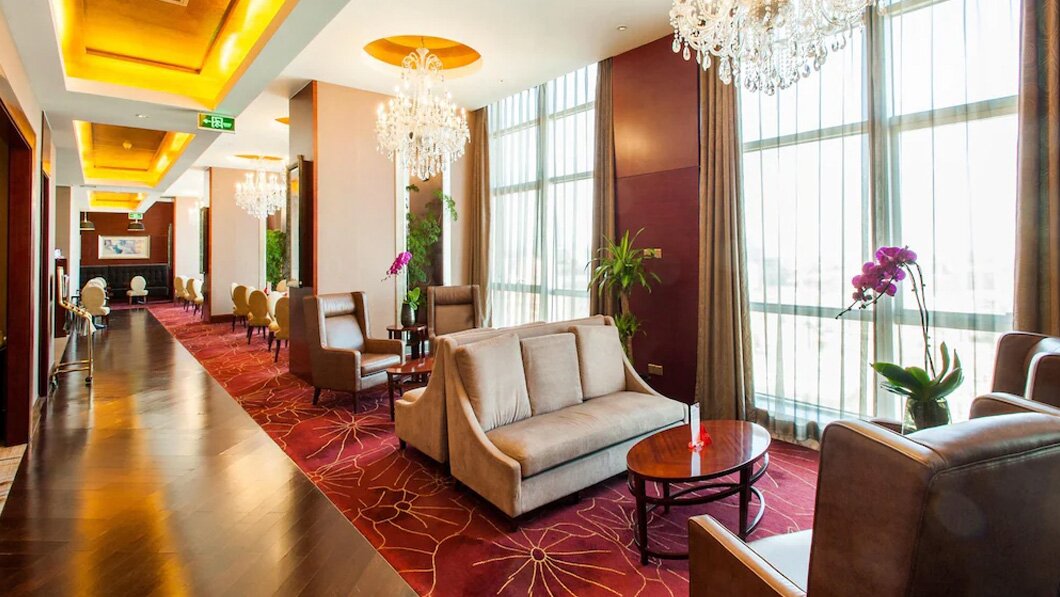
Accommodation will be provided from 11–17 October 2026 at Crowne Plaza Beijing Zhongguancun, a premium international hotel located in Beijing’s renowned technology and education hub. Conveniently situated approximately 20 minutes by car from Tsinghua University, the hotel offers easy access to key academic, business, and cultural destinations.

Participants will stay in comfortable and well-appointed guest rooms equipped with modern amenities, ensuring a pleasant and relaxing experience throughout the programme.

Crowne Plaza Beijing Zhongguancun
No.106 Zhichun Road, Hai Dian, 100086 Beijing, China
Note: All information on this page is correct but may be subject to change.
SHARE
Other programmes
Invest in a lifelong learning journey
As the industry’s preferred partner in learning and development, ABS offers customised and open enrolment training programmes that cover a comprehensive list of banking areas.
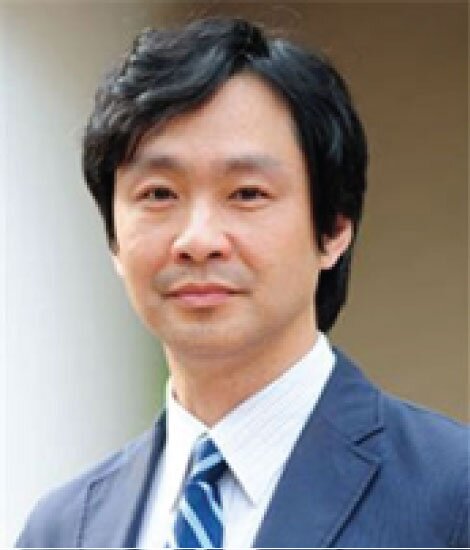
Pei-Luen Rau, Ph.D.
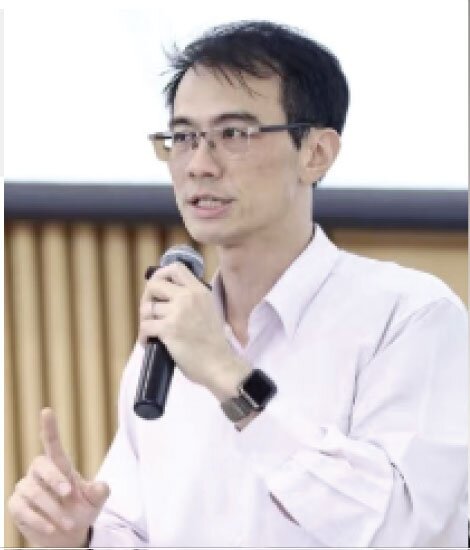
Pei-Luen Rau, Ph.D., Department of Industrial Engineering at Tsinghua University. Vice Dean of Tsinghua Global Innovation Exchange (GIX) Institute, National Science Fund for Outstanding Young Scholars, Former Director of the Institute of Human Factors and Ergonomics, Adjunct Professor of Georgia Tech University, University of North Carolina at Chapel Hill and Yonsei University, and Visiting Professor of Chuo University and RWTH Aachen University of Technology, Visiting Scholar of Microsoft Research Asia. Research areas cover Human Factors Engineering, Human Computer Interaction, User Insights and Experience Innovation, Cross-Cultural Research, Design for Well-being, Service Design and Evaluation.
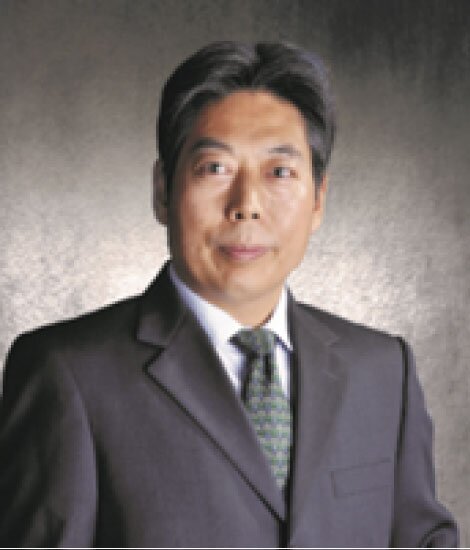
Gao Xudong, Ph.D.
Executive Dean and Professor, Schwarzman College, Tsinghua University.
Gao Xudong, Ph.D., Professor at the Department of Innovation, Entrepreneurship and Strategy, School of Economics and Management, Tsinghua University, and a Distinguished Professor at Schwarzman College, Tsinghua University. He also serves as Deputy Director and Research Fellow at the Research Center for Technological Innovation, Tsinghua University. His primary research interests include corporate strategy, technology strategy, and technological capability development.
Qingzhong Pan, Ph.D.
Qingzhong Pan, Ph.D., Executive Dean and Professor, Schwarzman College, Tsinghua University. His main research areas: enterprise development, corporate governance, Chinese economic history, and the Belt and Road Initiative. He teaches courses in Managerial Economics, Corporate Governance, Management Information Systems, and the History of World Business.
LIAO PinChao, Ph.D.
LIAO PinChao, Ph.D., is an Associate Professor and serves as an academic board member and associate editor for reputable international journals. Bridging engineering and cognitive science, his research pioneers the application of neuro-management paradigms—utilizing EEG, eye-tracking, and behavioral analytics—to optimize construction safety and legal risk mitigation. His core expertise spans occupational health and safety, cognitive ergonomics, risk analysis, and visual data analytics. By decoding human-factor variables at a granular level, Dr. Liao delivers data-driven frameworks that transform traditional construction engineering management into an evidence-based, cognitively optimized discipline.
Zhigang Qiu
Zhigang Qiu is Professor of Finance at the School of Finance, Associate Dean, Shenzhen Institute of Financial Studies, Renmin University of China. He received his PhD in Finance from the London School of Economics (LSE) in 2011. Professor Qiu's research focuses on three primary areas: (1) asset pricing theory, (2) delegated portfolio management, and (3) data economics. His scholarly work has appeared in leading finance journals such as the Journal of Financial and Quantitative Analysis (JFQA), Journal of Economic Theory (JET), Journal of Banking & Finance (JBF), Journal of Financial Markets (JFM), and Journal of Economic Dynamics and Control (JEDC). His research program effectively bridges theoretical finance with empirical market applications, with special attention to China's dynamic financial landscape and the growth of digital finance.
Dr. Peiyuan Guo
Dr. Peiyuan Guo is a renowned expert in global corporate social responsibility, green finance and responsible investment, with over two decades of research and professional experience in ESG responsible investment. In 2012, he initiated the China SIF (China Social Investment Forum), which has become the most influential ESG responsible investment event in China.

Domestically, Dr. Guo serves as a council member of the Green Finance Committee of the China Society for Finance, a member of the Green Securities Committee of the Securities Association of China, an expert advisor of the ESG Committee of the China Insurance Asset Management Association, a member of the Energy Conservation and Emission Reduction Certification Professional Committee of the China National Accreditation Service for Conformity Assessment, and a member of the ISO Sustainable Finance Standards China Correspondence Expert Group. Internationally, he is a China advisor for the United Nations Environment Programme Finance Initiative (UNEP FI), a member of the Sustainability Reporting Initiative Advisory Group of the Accounting Standards Group of the United Nations Conference on Trade and Development (UNCTAD), and a council member of the Asia Investor Group on Climate Change (AIGCC).
Sunday, 11 October 2026
Programme at a glance
Arrival in Beijing
Beijing City Tour
Welcome Dinner
Monday, 12 October 2026
Programme at a glance
Programme Briefing Opening Ceremony Digital Threats and Competitive Advantages – Digital Transformation
Lunch
Application of Generative AI in Banking & Finance
Free Time
Programme OUTLINE
Morning Session:
Opening Ceremony and Programme Introduction
This opening session sets the context for the programme, focusing on how artificial intelligence, digitalisation, and future-ready leadership are reshaping banking at a structural level. The programme emphasises application rather than theory, where participants will actively use AI tools to analyse credit decisions, assess risks, support ESG financing, and improve reporting and communication in their daily roles. Participants will also be introduced to insights from leading Chinese TechFin and FinTech institutions, observing how AI is embedded across the financial services value chain from decision-making to execution.
Digital Threats and Competitive Advantages – Digital Transformation
This session provides an in-depth exploration of digital transformation in the age of AI, focusing on generative AI, algorithmic management, and human–AI collaboration. It examines how AI-enabled systems reshape decision rights, organisational control, and accountability at senior management level. Through case analysis of leading Chinese technology firms such as Ant Group, ByteDance, and Baidu*, participants will evaluate when algorithmic outputs should be relied upon, when leadership judgment must intervene, and how ethical, regulatory, and reputational risks are managed to build sustainable competitive advantage.
Afternoon Session:
Application of Generative AI & Agentic AI in Banking & Finance
This session introduces the principles of generative AI and its practical applications in key areas of financial services, including risk management, customer service, and market forecasting. Participants will learn how AI models and Agentic AI can be applied to analyse data, support decision-making, and enhance operational efficiency. The session also addresses governance considerations, focusing on how AI reshapes accountability, escalation thresholds, and decision rights at senior management level, and how leaders communicate AI-driven outcomes to boards, regulators, and stakeholders.
Tuesday, 13 October 2026
Programme at a glance
Strategies and Leadership in the Era of Transformation
Lunch
On-site Teaching – FinTech Practice & Application in China (Company Visit & Exchange)*
Free Time
Programme OUTLINE
Morning Session:
Strategies and Leadership in the Era of Transformation
This session examines how macro-level shifts in technology, policy, and sustainability reshape corporate strategy and leadership. It explores how global realignment, digital acceleration, and evolving social expectations redefine competitive dynamics and organisational priorities. Participants will focus on leadership judgment in navigating uncertainty, aligning strategy, and sustaining organisational coherence, with emphasis on collaborative leadership, resilience, and long-term institutional positioning.
Afternoon Session:
On-site Teaching – FinTech Practice & Application in China (Company Visit & Exchange)

Through visits to leading fintech institutions, participants will observe how Chinese banks and technology firms apply digital lending, payment systems, and smart risk control in practice. Engagement with senior executives provides insights into the full journey from strategy design to implementation. Using a structured “See–Ask–Reflect–Apply” approach, participants will analyse leadership trade-offs between speed and control, automation and human judgment, and innovation and regulatory compliance, translating observations into actionable insights for their own institutions.

Wednesday, 14 October 2026
Programme at a glance
AI in Retail and Commercial Banking: Enhancing Credit, Risk and Customer Decisions
Lunch
Cross-Border Financial Integration – Lessons for Malaysia and Singapore from the Hong Kong– Guangdong Experience
Free Time
Programme OUTLINE
Morning Session:
AI in Retail and Commercial Banking: Enhancing Credit, Risk and Customer Decisions
This hands-on session enables participants to apply AI tools to real banking scenarios, including credit assessment, risk identification, and customer engagement. Participants will generate structured credit analyses, challenge assumptions, and evaluate outputs from compliance and regulatory perspectives. The session demonstrates how AI can improve the speed, consistency, and robustness of decision-making while maintaining professional accountability and oversight.
Afternoon Session:
Cross-Border Financial Integration – Lessons for Malaysia and Singapore from the Hong Kong–Guangdong Experience
This session provides a structured analysis of the Hong Kong–Guangdong model as a mature example of cross-border financial integration. It explores how regulatory coordination, digital infrastructure, and financial connectivity mechanisms enable capital flows, data exchange, and institutional trust across jurisdictions. Participants will examine how AI and financial technology support risk assessment, ESG measurement, and operational efficiency, and assess the implications for Malaysia and Singapore, particularly in the context of emerging regional integration initiatives.
Thursday, 15 October 2026
Programme at a glance
The Management Secrets of Successful Chinese Enterprises
Lunch
Company Visit and Exchange with Leading Chinese Enterprises
(e.g. Lenovo / iFLYTEK / JD / Zhipu*)
*Subject to confirmation
Farewell Dinner
Programme OUTLINE
Morning Session:
The Management Secrets of Successful Chinese Enterprises
This session examines the management philosophies and operating systems of leading Chinese enterprises such as Huawei, Tencent, and Ant Group. It focuses on three key pillars: values integration, resilient organisational design, and ecosystem governance. Participants will analyse how leadership intent is translated into systems, decision rights, and cultural discipline, and will extract practical frameworks that can be adapted to strengthen organisational resilience, alignment, and long-term growth within their own institutions.
Afternoon Session:
Company Visit and Exchange with Leading Chinese Enterprises (e.g., Lenovo, iFLYTEK or JD)
Participants will engage in on-site visits and dialogue with senior leaders from leading Chinese enterprises. This session provides direct exposure to how organisations align culture, leadership, and strategic execution in dynamic environments. Participants will examine leadership trade-offs between decentralisation and accountability, innovation speed and risk control, and organisational resilience under scale, translating these insights into actionable leadership approaches within their own banking context.
Friday, 16 October 2026
Programme at a glance
AI for Sustainability Banking, Reporting, Meetings and Productivity
Lunch
Leading Through Complexity: Systemic Resilience and Resolution Leadership in an AI-Enabled Financial System
Certificate Ceremony
Free Time
Programme OUTLINE
Morning Session:
AI for Sustainability Banking, Reporting, Meetings and Productivity
This hands-on session focuses on the application of AI in sustainability banking and operational productivity. Participants will use AI to analyse ESG disclosures, support green financing decisions, and generate structured management and board-level reports. In addition, the session explores how AI enhances efficiency in meetings, documentation, and communication, enabling a shift from manual processes to structured thinking and faster execution, while recognising associated risks and governance requirements.
Afternoon Session:
Leading Through Complexity: Systemic Resilience and Resolution Leadership in an AI-Enabled Financial System
Learning Objectives: Master the application methods of big model technology in banking business decision-making and improve data-driven decision-making capabilities
This session focuses on leadership in managing systemic risk in an increasingly digital and interconnected financial environment. Drawing on lessons from past financial crises, participants will explore how recovery and resolution planning can be reframed as strategic governance tools. The session examines emerging risks such as digital concentration, cloud dependency, and rapid asset repricing, and develops leadership capability in decision-making, capital discipline, and coordinated response. By mastering emotional regulation, active listening, and non-violent communication, leaders align diverse stakeholders to ensure agility, institutional stability, and sustainability.
Asian Banking School Logo
The Asian Banking School (ABS) is dedicated to developing talent and is the largest specialised provider of quality banking training programmes in the ASEAN region.
Copyright © Asian Banking School (ABS) (201201039737 (1024215-T)). All rights reserved.
There are currently no upcoming programme slots.
Please email us here or call us at +603 2701 7822 if you want to check on future slots.


 | 
Asian Banking School
Global Banking Professionals Programme
Time Slot
PAX No
Programme Fees


Note ON CURRENCY CONVERSION in IPAY88 Payment Gateway
Please take note that this amount will be reflected in Malaysian Ringgit (MYR) in the iPay88 Payment Gateway based on the daily foreign currency exchange rate.
Note for offline payment Method
Kindly download the Payment Form here for our banking details and if making company sponsored payments. You are required to upload this form to complete the registration process.
Programme added to cart successfully.

Please proceed to your cart to enter participant details and complete payment.

Text
Note for offline payment Method
Kindly download the Payment Form here for our banking details and if making company sponsored payments. You are required to upload this form to complete the registration process.
Failed to add programme to cart.

Please refresh the page and try again.

Ooops!
Generic Popup2