Asian Banking School Logo

Overview

IN COLLABORATION WITH:
Creating opportunity out of risk.
The Global Shifts and Risk for Banking Leaders programme addresses the primary disruptors and risk factors shaping the banking sector. Participants will gain insight into likely sources of disruption, understand how to prepare their institutions for these shifts, and identify where future opportunities may emerge.

The programme leverages the expertise of senior industry practitioners and prominent academics from one of the world’s leading business schools to create a transformative learning environment. This collaboration with Saïd Business School, University of Oxford, reflects ABS’s commitment to providing world-class executive education for the financial sector.

The programme responds directly to the need for banking leaders to adapt to global shifts, manage systemic and strategic risks, and develop robust strategies in a rapidly evolving environment. Participants will gain practical tools for real-world application, strengthen leadership capability, and benefit from high-level peer exchange. The immersive Oxford setting further reinforces the programme’s developmental impact
Programme Outline
Learning Outcomes
At the end of the programme, participants will be able to:
  • Examine change drivers, weak signals and how these drive a purposeful strategy
  • Develop a framework to re-classify risks and value judgements
  • Assess the opportunities and threats from technology and respond strategically to digital transformation risks
  • Analyse the opportunities and risks posed by AI
  • Strengthen leadership capability to navigate uncertainty and expand strategic choices
  • Consider the implications of geopolitics
Programme Faculty
Programme Speaker
Saïd Business School blends the best of new and old.
It is a vibrant and innovative business school deeply embedded in a 900-year-old world-class university which aims to lead the world in research and education for the benefit of society globally. It creates programmes and ideas that have worldwide impact and educates people for successful business careers. As a community, Saïd Business School seeks to tackle world-scale problems and undertake ground-breaking research that transforms individuals, organisations, business practices, and society. It delivers cutting-edge programmes, including the highly regarded MBA, Executive MBA, several specialist MScs, a portfolio of custom solutions and open programmes, and accredited diplomas for executives. The university is ranked 1st worldwide for higher education by The Times Higher Education (2017-2023) and is one of the foremost centres of learning, teaching and research.

As a department of the University, Oxford Saïd is dedicated to developing a new generation of business leaders and entrepreneurs and conducting research, not only into the nature of business, but the connections between business and the wider world. The School has been ranked first in the UK for Open Executive Education programmes for the last seven years. Overall, Oxford Saïd’s Executive Education is ranked fifth in the world.
PROGRAMME VENUE
Global Leadership Centre, Saïd Business School, University of Oxford
The Global Leadership Centre is Saïd Business School's dedicated home for Executive Education and has been designed as a dynamic, sustainable space for education, convening and retreat. Originally the historic Osney Power Station, the building has been reimagined to bring together learning, accommodation, dining, networking and wellbeing in one seamless residential environment. It is designed to support both energy and reflection, enabling participants to step away from day-to-day pressures and engage fully in learning, networking and personal development.
Accommodation
Accommodation will be provided from 20 - 26 September 2026 at the University of Oxford’s Saïd Business School Global Leadership Centre. Located at the historic Osney Power Station site, the centre is approximately 1.6 km west of Oxford city centre, within a 5 to 10-minute walk.

Participants will stay in the Global Leadership Centre’s modern en-suite bedrooms. Set across four floors, these comfortable and quiet rooms are thoughtfully designed to offer a restful environment that supports reflection, relaxation, and rejuvenation throughout the learning experience.

Global Leadership Centre
Arthur Street, Oxford, OX2 0AS
Note: All information on this page is correct but may be subject to change. Please contact or email us to get the latest version if there is any.
SHARE
Other programmes
Invest in a lifelong learning journey
As the industry’s preferred partner in learning and development, ABS offers customised and open enrolment training programmes that cover a comprehensive list of banking areas.
Programme Director
Andrew Gibbons
Associate Fellow, Saïd Business School, University of Oxford
Andrew has served as Programme Director for this programme since 2024, bringing continuity, structure and a strong understanding of the participant experience across successive cohorts. Drawing on this experience, he will help enhance the programme design, brief the academic team and ensure a cohesive narrative runs throughout the learning journey. Building on the success of the earlier delivery, Andrew will lead the group as they explore identified risks and proposed mitigations. His focus will be on helping participants feel at ease, engage fully with the programme themes and gain maximum value from the experience. Working closely with the ABS team, he will draw on the combined expertise of both organisations to deliver an enriching and coherent learning journey for all participants. Andrew brings extensive experience helping individuals, teams and organisations achieve their potential. This experience is drawn from working in boardrooms on strategy design and with operational leaders as they turn strategy into action.

He is an accredited executive coach with nearly 2,500 hours of one-to-one coaching with senior executives from around the world. He has collated the learning from this experience into a series of practical leadership shortcuts that feature in his work with senior executives. As lead coach, he briefs and manages teams of coaches on executive education programmes. As a trainer, he has directed and delivered programmes across sectors including construction, manufacturing and services. As a facilitator, he steers senior executive teams through change, delivers leadership development programmes and runs employee engagement workshops.

Academic Director
Amir Amel-Zadeh
Associate Professor of Accounting, Saïd Business School, University of Oxford
As Academic Director for the programme, Amir provides academic input and oversight in his area of expertise. His research examines the effects of companies’ financial and non-financial information disclosures on capital markets, and the mediating role of accounting standards and information intermediaries. Amir’s research has been published in leading academic and practitioner journals, including the Journal of Accounting and Economics, The Accounting Review, Review of Accounting Studies and Financial Analyst Journal. His work has been cited by the business press, including the Financial Times and The Guardian, as well as in policy documents by the EU, Bank for International Settlements, IMF, World Economic Forum and accounting standard setters.

He has presented his research at conferences and business schools across the world and has held visiting positions at Harvard Business School, New York University Stern School of Business, Columbia Business School and the University of Bologna. Prior to joining Oxford Saïd, Amir was at Judge Business School, University of Cambridge. He teaches on the MBA and Executive MBA, as well as on executive programmes for legal and financial services professionals. He has taught or consulted for the financial services industry in the US, Europe, Asia and the Middle East. He currently serves as Co-Editor-in-Chief of the European Accounting Review and is on the editorial board of Accounting and Business Research. He received his PhD from the University of Cambridge. He has co-authored and co-edited Accounting for M&A: Uses and Abuses of Accounting in Monitoring and Promoting Merger, published by Routledge in 2020. Alongside his role at Saïd Business School, Amir is a board member of the UK Endorsement Board and sits on the Advisory Panel for the Capitals Coalition.
Wendy Kilminster
Post Doctoral Research Fellow
Wendy Kilminster is a Post Doctoral Research Fellow in Strategy at Saïd Business School, University of Oxford.

Wendy’s work is orientated around the complexities of determining strategy and organising at the inter-organisational level. She studies how tensions and interdependencies influence the ongoing strategy and survival of interorganisational arrangements. Her work aims to contribute a richer understanding of the processes, dynamics and theoretically relevant characteristics of ongoing strategic management and organising in interorganisational arrangements in the face of the inherent tendencies to instability in such settings.

Wendy completed her doctorate at Bayes Business School where she also taught on the undergraduate Business Management and MBA programmes. Prior to her move to academia, Wendy worked in the financial services industry and has 20 years of experience in strategy and change roles in the Lloyd’s and London insurance market.
Antonio Weiss
Author and Consultant
Antonio Weiss is an award-winning technology expert and best-selling author. His focus is on helping public and private sector leaders regain agency in the age of AI.

He has advised the Office for Artificial Intelligence, the UK Space Agency and NHS AI Lab, the Government Digital Service, and other pioneering organisations on AI adoption and digital transformation. He currently sits as an appointed member of the UK Government Digital Service Responsible AI Panel. He was previously Senior Advisor on Digital, Data & Technology to the Office of the incoming UK Prime Minister.
 
Antonio is the author of five books which have been translated into over a dozen languages. His works have been UK #1 Business Bestsellers and shortlisted for the CMI Book of the Year Award. A popular keynote speaker with over 150k views online, he has regularly featured on international media including on the BBC Documentary ‘Magic Consultants.’

He is also an Affiliated Researcher at the University of Cambridge's Digital State programme and the exited co-founder of Thomas Clipper, which has featured in GQ, The Guardian and The Telegraph. He holds a PhD from Birkbeck, University of London. He served for three-terms as a local government councillor and cabinet member in a major authority.
Cameron Hepburn
Professor of Environmental Economics
Cameron Hepburn is the Battcock Professor of Environmental Economics at the Smith School of Enterprise and the Environment, University of Oxford. He also serves as the Director of the Economics of Sustainability Programme, based at the Institute for New Economic Thinking at the Oxford Martin School.

Cameron has published widely on energy, resources and environmental challenges in various disciplines including engineering, biology, philosophy, economics, public policy and law, drawing on his undergraduate degrees in law and engineering (Melbourne University) and master's and doctorate in economics (Oxford as a Rhodes Scholar). He has co-founded and exited three startups and invests in and supports other early-stage ventures. Cameron advises financial institutions, private equity firms, corporate boards and government ministers on climate, energy, and environmental issues.
Henry Majid
Entrepreneur and Leadership Consultant
Henry Majed is a social entrepreneur, executive mentor and leadership consultant specialising in systems leadership, innovation, sustainability and organisational resilience. He is a Visiting Fellow at the Skoll Centre for Social Entrepreneurship at Saïd Business School, University of Oxford, where he contributes to programmes on leadership, resilience, strategy, innovation and climate impact for MBA and executive audiences.

Henry co-founded MyMynd, a digital mental health and wellbeing platform designed to support early identification, targeted intervention and proactive resilience-building in the workplace. He previously helped build and lead Innovation Gateway, an award-winning alliance of major organisations focused on scaling sustainability innovation across buildings and the built environment.

Earlier in his career, Henry held senior roles at Mars, Johnson & Johnson and Twentieth Century Fox, and served as an advisor to the World Health Organization. He is a regular keynote speaker and writer on leading through uncertainty, resilience and systems innovation, and works with corporate leaders and venture-backed start-ups as an advisor, coach and mentor.

Henry completed a PhD in Neuroscience at the University of Cambridge and an MBA at the University of Oxford.
Ian Goldin
Professor of Globalisation and Development
He is currently Oxford University Professor of Globalisation and Development, Senior Fellow at the Oxford Martin School, a Professorial Fellow at the University’s Balliol College and responsible for the Oxford Martin School Programmes on the Future of Work, Technological and Economic Change, and Future of Development.

During his decade as Director the School established 45 programmes of research, bringing together more than 500 academics from across Oxford, from over 100 disciplines, and becoming the world’s leading centre for interdisciplinary research into critical global challenges.

Professor Goldin initiated and was Vice-Chair of the Oxford Martin Commission for Future Generations, which brought together international leaders from government, business, academia, media and civil society to address the growing short-term preoccupations of modern politics and business, and identify ways of overcoming today’s gridlock in key international negotiations. The Commission's report, Now for the Long Term, was published in October 2013.

From 2003 to 2006 he was Vice President of the World Bank, and prior to that the Bank’s Director of Development Policy (2001-2003). He served on the Bank’s senior management team and led the Bank’s collaboration with the United Nations and other partners as well as with key countries. As Director of Development Policy, he played a pivotal role in the research and strategy agenda of the Bank.

From 1996 to 2001 he was Chief Executive and Managing Director of the Development Bank of Southern Africa and served as an advisor to President Nelson Mandela. He succeeded in transforming the Bank to become the leading agent of development in the 14 countries of Southern Africa. During this period, Goldin served on several Government committees and Boards, and was Finance Director for South Africa’s Olympic Bid.

Previously, Goldin was Principal Economist at the European Bank for Reconstruction and Development (EBRD) in London, and Program Director at the OECD Development Centre in Paris, where he directed the Programs on Trade, Environment and Sustainable Development.

He has a BA (Hons) and a BSc from the University of Cape Town, an MSc from the London School of Economics, and an MA and Doctorate from the University of Oxford.
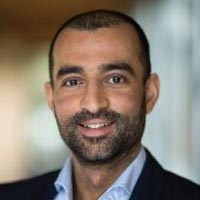
Zubin Taraporevala
Zubin Taraporevala is a seasoned expert in banking strategy and digital transformation, drawing on decades of experience as a Senior Partner at McKinsey & Company. His work at McKinsey focused on global and European banking strategy, digital and analytics strategy, risk management, and large-scale transformations, contributing to numerous influential reports and articles on the future of financial services.
 
He holds significant leadership and governance roles, currently serving as a Member of the Board of Directors of several financial services and investment companies. His board experience also includes a four-year tenure as a Director at City Harvest, Inc., where he helped shape strategy.
 
Beyond his professional roles, Zubin is actively involved in academia, serving as a guest lecturer on banking strategy at prestigious institutions such as Oxford University’s Said Business School and Cornell University’s Johnson Graduate School of Management, where he also remains an engaged alumnus and active speaker.
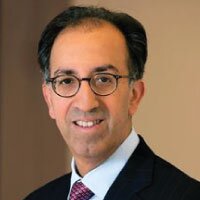
Basab Mitra
Basab leads McKinsey’s Transformation practice for financial institutions in Europe. He brings together 28 years of experience as CEO, PE Operating Partner and Consultant to help companies across “good to great” and “restructuring” situations. He brings to bear his pattern recognition and operating experience to help clients reset their performance agenda holistically across financial, customer, employee and capability dimensions. He serves banks, wealth and asset managers, commercial insurers and specialist infrastructure providers with a focus on UK and European clients.
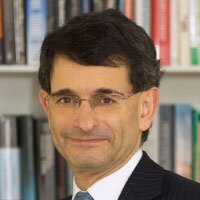
Professor Colin Mayer
Colin Mayer is Emeritus Professor of Management Studies at the Blavatnik School of Government and Saïd Business School at the University of Oxford.

Colin was the first professor at Saïd Business School in 1994, the Peter Moores Dean of the Business School between 2006 and 2011, and the first Director of the Oxford Financial Research Centre between 1998 and 2005. He was a Harkness Fellow at Harvard University, a Houblon-Norman Fellow at the Bank of England, the first Leo Goldschmidt Visiting Professor of Corporate Governance at the Solvay Business School, Université de Bruxelles, and has had visiting positions at Columbia, MIT and Stanford universities.
 
He is a Fellow of the British Academy, the Centre for Economic Policy Research, and the European Corporate Governance Institute. He was Chair of the Scottish Government Business Purpose Commission, and a member of the Board of Trustees of the Oxford Playhouse, the UK Competition Appeal Tribunal, the UK Government Natural Capital Committee, the International Advisory Board of the Securities and Exchange Board of India, and the UK Financial Markets Law Committee Working Group on Pension Fund Trustees and Fiduciary Duties.
 
Colin was chairman of Oxera Ltd. between 1986 and 2010 and assisted in building the company into what is now one of the largest independent economics consultancies in Europe. He was a founding director of the energy modelling company, Aurora Energy Research Ltd. He advises companies, governments, international agencies, and regulators around the world, and he led the British Academy enquiry into 'the Future of the Corporation in 2017.
Pedro Bordalo
Professor of Financial Economics
Professor Bordalo's areas of expertise are behavioural finance and behavioural economics.

His work has focused on the role of selective attention and memory in driving attitudes towards risk and in shaping the content of beliefs and expectations. This approach can explain key evidence that is puzzling from the perspective of standard rational models, including systematic instability of risk preferences, predictability of stock and bond market returns, predictable forecast errors and boom-bust cycles in credit markets.

Pedro’s research has been published in the Journal of Finance, Journal of Political Economy, the Quarterly Journal of Economics, the Review of Economic Studies, and the American Economic Review, among other leading journals. He has been invited by regulatory entities such as the Competition and Markets Authority (UK), the Federal Trade Commission (US), and the Financial Conduct Authority to present his work and discuss policy implications.

Prior to joining Oxford University, Pedro was a tenured Associate Professor in the Department of Economics at Royal Holloway, University of London. He holds an MSc in Theoretical Physics from the Ecole Normale Superieure and a PhD in Theoretical Physics from Universite Paris VI. He has taught at the London School of Economics and at Harvard University.
Likhit Wagle
Associate Fellow
Likhit has extensive experience of working closely with C-level executives in Fortune 500 companies to deliver value to their customers and shareholders.

Likhit has over 25 years of experience in strategic consulting with a notable track record for complex enterprise wide transformation in the banking industry.

During this time he has managed one of the world’s largest technology businesses providing consulting, outsourcing services and software to the top global banks.

He has also led several successful technology enabled business transformation engagements for blue chip banks worldwide, including: exploiting digital technologies to radically improve customer experience, automating banking processes using artificial intelligence to achieve substantial improvements in efficiency, effectiveness and cost reduction.

As a trusted coach for top teams seeking to combine business and technology change to achieve tangible benefits on accelerated timetables.

Likhit is a recognised thought leader in the industry, speaker at industry events and banking publications and previously led strategy consulting for PwC Consulting in the UK and, before that, led mergers and acquisitions and Investment Banking for PwC Corporate Finance in the UK.

He has a BA Hons in Economics and Business Finance from the University of Manchester and is a chartered accountant.
Sunday, 20 September 2026
Programme at a glance
Check-in and Arrivals
Drinks Reception
Monday, 21 September 2026
Programme at a glance
Key Session : The Current Landscape
Welcome and programme introduction
Community building – current challenges, opportunities and risks
Lunch
The banking landscape – a world view
Purpose – beyond profit
Review of the Day
Welcome Dinner
Programme OUTLINE
Morning Session:
Community building – from where do we start?
In the opening session of the programme the Academic and Programme Directors will lead a discussion on the current situation facing participants. This exchange will surface shared concerns and clarify core risks and opportunities affecting the banking sector, particularly within Asia. It will establish the central questions guiding the week.
Afternoon Session:
The banking landscape – a world view
This session is about making informed choices in a complex environment. We recognise that transformation in the banking and financial sector is a continuous process informed by data. The most successful leaders are creating a competitive advantage through deployment of technology. This session will consider the role of talent, the operating model and technology in creating a roadmap to value.
Purpose – beyond profit
Purpose, more than profit, is the strategic factor that endures throughout short term financial, economic and political changes. This session will consider what we mean by purpose and how it fits into the strategy of a financial institution.
Tuesday, 22 September 2026
Programme at a glance
Key Session : Systemic risks
Current issues in bank capital and risk management
The failure modes in the financial sector
Lunch
The human in the loop - human factors and how they shape our response to risk
Review of the Day
Free evening
Programme OUTLINE
Morning Session:
Responding to Risk – The failure modes in the financial sector
The signs of most financial and bank failures are, with hindsight, apparent in the balance sheets and solvency statements of institutions and governments. There is more data, more experience and more regulation yet banks continue to re-invent high risk operations that take them to the edge of solvency. In this session we will review several case studies of bank failure to identify the warning signs of possible future failure. It will help participants be more attuned to the failure modes in the financial system, and predict how leaders, regulators and policy makers might react.
Afternoon Session:
Risk and the human in the loop – good or bad?
This session will examine different levels of risk: preventable, strategic, and external. Participants will explore how this categorisation might change their approach to risk. Participants will also develop a framework that re-classifies risk types and appropriate treatment of those risks and risk appetite.” With “This session will examine how we make judgements. As banks gain access to more and more data and deploy tools to analyse that data, judgement becomes more important. Whilst algorithms can derisk judgement, they can also miss unpredictable or new events. There is a strong case for ensuring judgement is exercised by well-informed individuals. We will examine the interface between information and judgement.
Wednesday, 23 September 2026
Programme at a glance
Key Session : Technology - risk, opportunity or both
Competitive strategy in a digital era
Lunch
AI and digital transformation, process pitfalls and risks
Review of the Day
Oxford – a city of culture
Programme OUTLINE
Morning Session:
Competitive Strategy in a Digital Era
The session examines fintech innovation and competitive dynamics among incumbents and emerging players. The group will explore how new players are managing the regulatory interface to create new markets and better serve customers. Participants will appraise the opportunities and threats from technology and draw up better strategies for investing in and competing with new technologies. We will look at the links between data maturity, organisational capability, AI strategy and the organisational goal.
Afternoon Session:
AI Threats and Opportunities
AI is changing how individuals, organisations and sectors operate. Used appropriately it multiplies the potential of individuals, transforms operations and delivers unique customer experiences. This session will take a broad look at AI and how the technology is affecting both customers facing and back-office operations. Participants will hear a balanced view of the state of technology and evaluate the opportunities and risks posed by AI.
AI and Digital transformation – process, pitfalls and risk
The dash to apply AI to every aspect of an operation has caused a mix of amazement and disappointment. This session will explore how digital transformation and AI can drive performance in a measured way. Using a case study exercise we will go back to the basics of putting the user first, being flexible in our vision and funding for failure.
Thursday, 24 September 2026
Programme at a glance
Key Session : External risks
Leading in uncertain times
Lunch
Climate change and its implications for banking
Review of the Day
Celebration Dinner
Programme OUTLINE
Morning Session:
Leading in uncertain times
Throughout the week participants have considered the different risks, opportunities and factors that drive change in the sector. In this final session participants will consider how those factors might act on their institution, their teams and themselves.

This session will consider how middle and senior executives can navigate through uncertainty and lead their teams into the unknown. Participants will use scenarios and a diagnostic approach to find ways to expand their range of leadership choices towards risk.
Afternoon Session:
Climate change and its implications for banking
Climate risk affects asset valuation directly and regulatory exposure indirectly. This session will use the lens of climate change to examine how external events and systems can impact on assets, strategy and operations. Participants will explore the future impact of climate change and use a simulation to explore how decisions are made in response to external factors such as climate.
Friday, 25 September 2026
Programme at a glance
Key Session : Leading the response
Geopolitics in a world in flux
Lunch
Making a difference – ideas into action
Certificate Ceremony
Free Time
Programme OUTLINE
Morning Session:
Geopolitics in a World in Flux
This session will explore the diverging political and economic ambitions of China, the US, Europe and Asia, how it will reshape the risk profile for Asian banks and creating both opportunities and threats. Participants will be able to read the signals from political leaders and differentiate between a short-term vote winning interventions and a long-term policy shifts. These insights will help banking leaders to set better and more agile strategies.
Asian Banking School Logo
The Asian Banking School (ABS) is dedicated to developing talent and is the largest specialised provider of quality banking training programmes in the ASEAN region.
Copyright © Asian Banking School (ABS) (201201039737 (1024215-T)). All rights reserved.
There are currently no upcoming programme slots.
Please email us here or call us at +603 2701 7822 if you want to check on future slots.


 | 
Asian Banking School
Global Shifts and Risk for Banking Leaders
Time Slot
PAX No
Programme Fees


Note ON CURRENCY CONVERSION in IPAY88 Payment Gateway
Please take note that this amount will be reflected in Malaysian Ringgit (MYR) in the iPay88 Payment Gateway based on the daily foreign currency exchange rate.
Note for offline payment Method
Kindly download the Payment Form here for our banking details and if making company sponsored payments. You are required to upload this form to complete the registration process.
Programme added to cart successfully.

Please proceed to your cart to enter participant details and complete payment.

Text
Note for offline payment Method
Kindly download the Payment Form here for our banking details and if making company sponsored payments. You are required to upload this form to complete the registration process.
Failed to add programme to cart.

Please refresh the page and try again.

Ooops!
Generic Popup2