Asian Banking School Logo

Overview

As banks reposition themselves from pure profit maximisers to purpose-driven financial intermediaries, ethical decision-making has become a core risk and leadership capability. Today’s bankers face scrutiny not only from regulators, but from society, investors, customers, and future generations.
Greenwashing is no longer a reputational footnote. It represents a convergence of conduct risk, governance failure, misleading disclosure, and ethical blind spots. Many of these failures occur not because bankers are unethical, but because they operate within systems that reward short-term performance, fragmented accountability, and selective storytelling.

This 7-hour immersive workshop bridges ethical theory and real banking decisions. Using Consensus Theory, Social Contract Theory, the Tragedy of the Commons, Rawlsian Justice, and Malaysia’s Value-Based Intermediation (VBI) framework, participants are guided through progressively complex cases, from frontline dilemmas to board-level ESG decisions.

The programme explicitly addresses greenwashing risk, ESG integrity, stakeholder legitimacy, and intergenerational justice, with strong alignment to BNM expectations, VBI sectoral guidance, and HRD Corp capability priorities.
Programme Outline
Learning Objectives
By the end of the programme, participants will be able to:

  • Distinguish clearly between legal compliance and ethical duty, applying the Drowning Man principle and the concept of supererogatory acts
  • Evaluate operational, conduct, and reputational risks of greenwashing, including selective disclosure and metric inflation, using real regulatory cases
  • Apply Tragedy of the Commons theory to systemic climate and financial risks, identifying viable regulatory and market-based solutions
  • Synthesize conflicting stakeholder demands using Consensus Theory (internal decision-making) and Social Contract Theory (external legitimacy)
  • Critically assess high-impact lending decisions using Rawls’ Theory of Justice and VBI Sectoral Guides
  • Translate ethical frameworks into practical, defensible banking decisions at portfolio, committee, and disclosure levels

Programme Outline
  • Module 1: Ethics, Banking, and the Common Good
    To reset ethics as a systemic banking issue, not a personal moral preference

    • From Malthus to Charles Handy: scarcity, growth, and social responsibility
    • Post-COVID banking realities and societal expectations
    • Why ESG failures are rarely accidental

    Gamification Simulation: “The Tragedy of the Fish Pond”
    Participants act as profit-seeking banks extracting value from a shared ecosystem. Rational individual decisions gradually collapse the system.

    Debrief
    • Mapping results to Garrett Hardin’s Tragedy of the Commons
    • Banking equivalents: aggressive lending, ESG arbitrage, race-to-the-bottom disclosures
    • Matching banking tools to solutions:
      • Licences
      • Credits
      • Prudential limits
      • Disclosure obligations

  • Module 2: Legal Compliance vs Ethical Duty
    Key Case: The Drowning Man Scenario

    Participants debate:
    • What the law requires
    • What ethics demands
    • What organisations reward or punish

    Concepts Applied
    • Supererogatory acts in banking
    • Moral luck and organisational silence

    Supplementary Mini-Case
    • Whistleblowing hesitation in ESG misreporting
    • When “following process” becomes moral avoidance

  • Module 3: Inside the Bank – Consensus vs Social Legitimacy
    • Framework Clash
      • Consensus Theory: the bank as a coalition of interests
      • Social Contract Theory: society’s license to operate

    • Role-Play Exercise
      Participants simulate an internal bank meeting involving:
      • Sales
      • Risk
      • Sustainability
      • Compliance

    • Topic: Closure of rural branches vs digital efficiency

    Debrief
    • Why internal consensus often fails externally
    • Reputational backlash vs internal logic
    • Stakeholder misalignment using Mendelow’s Grid

  • Module 4: The Greenwashing Trap – Global Regulatory Failures
    Case Study 1: HSBC
    • Selective disclosure in sustainability advertising
    • Funding fossil fuels alongside green claims

    Case Study 2: DWS
    • Metric inflation and absence of ESG evidence
    • Regulatory enforcement consequences

    Analytical Lens
    • Misrepresentation
    • Exaggeration
    • Selective disclosure

    Banking Translation
    • Marketing approval
    • ESG disclosures
    • Board accountability

  • Module 5: Malaysian Context – Palm Oil, VBI, and ESG Reality
    Core Case: The “Green” Palm Oil Loan

    Participants evaluate:
    • Environmental impact
    • Community consequences
    • Commercial viability

    Frameworks Applied
    • VBI principles
    • RSPO certification
    • Rawls’ Original Position

    Discussion
    Would this loan be approved if you did not know whether you were:
    • A bank executive
    • A plantation worker
    • A displaced villager

  • Module 6: Future-Proofing and Intergenerational Justice
    Activity: “The Veil of Ignorance – Banking 2050”
    Participants vote on long-term financing strategies without knowing their future position in society.

    Ethical Lenses
    • Libertarian
    • Liberal
    • Rawlsian

    Strategic Mapping
    Participants classify their bank’s current ethical stance using:
    • Short-Term Shareholder
    • Enlightened Shareholder Value
    • Shaper of Society

METHODOLOGY
  • Case-Based Learning (65%)
  • Gamification Simulation
  • Role-Play & Ethical Dispute Mapping
  • Facilitated Reflection & Portfolio Translation
Participant profile
  • Junior bankers (analysts, relationship managers, frontline staff)
  • Senior bankers (approvers, management, committee members)
  • ESG, Risk, Compliance, Credit, Sustainability, and Strategy teams
Trainer
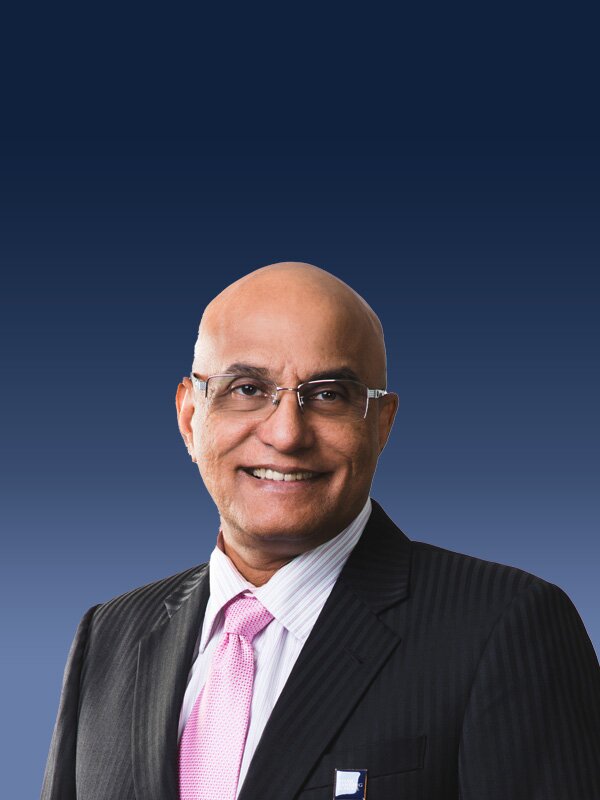
Dr Vijayan Paramsothy
Director of Digital Banking & Leadership,
Asian Banking School
Found a programme that you think would be suitable for your organisation?
Many of our courses can be customised and delivered in-house. We also provide consultancy services to create tailor-made training programmes that are specifically aligned with your organisation’s strategic learning requirements. Contact us today to learn more about how we can support your team’s development by completing the In-House Request Form here or Emailing Us here.
SHARE
Other programmes
Invest in a lifelong learning journey
As the industry’s preferred partner in learning and development, ABS offers customised and open enrolment training programmes that cover a comprehensive list of banking areas.
Dr Vijayan Paramsothy
Director of Digital Banking & Leadership, Asian Banking School
Dr Vijayan Paramsothy is the Director of Digital Banking & Leadership at the Asian Banking School. He started his career working in one of the big 8 Chartered Accountants and Management Consultancy firms in the UK. He has over 20 years of banking experience working in local and foreign banks up to a senior management level, ranging over a diverse range of disciplines.

He is currently involved in structuring bespoke technical and soft skill programmes for banks. In addition, he is involved in the curriculum working committee for professional qualification programmes such as the Chartered Banker and Bank Risk Management. He is also a designated Chartered Banker trainer, bringing a fresh approach to self-directed learning using mind-mapping techniques, case studies and problem-based learning. Dr Vijay has published banking and finance related text books and journal articles internationally, including, “Success Factors for the Implementation of Entrepreneurial Knowledge Management in Malaysian Banks” (Journal of Information & Knowledge Management, 2013).

Dr Vijay holds an Honours Degree in Accounting and Finance from Scotland, a Master of Science Degree in Multimedia Technology (Banking), a Doctor of Business Administration (Banking Strategy and Marketing) from Australia, and a Doctor of Philosophy (Knowledge Management in Banking) from Malaysia. He recently successfully completed his Chartered Banker MBA from the Bangor Business School, Wales together with his Chartered Banker status awarded by the Chartered Banker Institute in Scotland. He is also a Certified Training Professional (ARTDO) and a Certified HRD Corp trainer.
Asian Banking School Logo
The Asian Banking School (ABS) is dedicated to developing talent and is the largest specialised provider of quality banking training programmes in the ASEAN region.
Copyright © Asian Banking School (ABS) (201201039737 (1024215-T)). All rights reserved.
There are currently no upcoming programme slots.
Please email us here or call us at +603 2701 7822 if you want to check on future slots.


 | 
Asian Banking School
The Greenwashing Challenge: Ethical Frameworks and Decision-Making for Sustainable Banking
Time Slot
PAX No
Programme Fees


Note ON CURRENCY CONVERSION in IPAY88 Payment Gateway
Please take note that this amount will be reflected in Malaysian Ringgit (MYR) in the iPay88 Payment Gateway based on the daily foreign currency exchange rate.
Note for offline payment Method
Kindly download the Payment Form here for our banking details and if making company sponsored payments. You are required to upload this form to complete the registration process.
Programme added to cart successfully.

Please proceed to your cart to enter participant details and complete payment.

Text
Note for offline payment Method
Kindly download the Payment Form here for our banking details and if making company sponsored payments. You are required to upload this form to complete the registration process.
Failed to add programme to cart.

Please refresh the page and try again.

Ooops!
Generic Popup2