

Asian Banking School Logo

Overview

IN COLLABORATION WITH:
Preparing Future Leaders for a Digital World
Technological innovations present us with the opportunity to not only improve our existing processes but also to engage in activities that were previously unattainable. The banking industry has historically been at the forefront of adopting a number of these innovations, with the first commercial mainframe, for example, being procured by a bank.

In its essence, banking business remains unchanged, however, the environment around it is continuously evolving. Technology has affected the way customers engage with banks, investment opportunities, the risks faced by banks, and the relationship with employees. A growing number of individuals now have access to the financial system, new currency types have emerged, and the increasing presence of tech-based firms has introduced innovative digital solutions that significantly impact our tasks and interactions. Social awareness, ethical issues, and equality and diversity debates propelled by social media may affect banks’ reputation and their ability to attract funding at reasonable costs. Applications of artificial intelligence and machine learning in finance and related areas take advantage of abundant data easily available to some players that can become new competitors to traditional banks.

The advances in technology have made us aware of new possibilities in the near future that we would not have considered otherwise. Simply keeping abreast of all these changes is not enough for banking leaders to deal with the multiple factors influencing the sector. Understanding them and acting accordingly is essential to identify business opportunities and avoid losses for their institutions.

Reflecting on the rapid growth of technological applications in banking over the last decade raises intriguing questions about future developments. Although the future may be uncertain, those who are better equipped to navigate the potential impacts of technological innovations will likely enjoy a competitive advantage.

The Emerging Banking Leaders Programme will allow participants not only to face the above-mentioned challenges in a more efficient way but also to explore opportunities arising from new business, professional and social practices. It combines a number of different activities such as seminars with academics and guest speakers from financial firms, case studies, discussions on presented topics, networking with practitioners, as well as a visit to a financial institution. This diverse range of learning methods aims to enhance participants’ experiences and enable them to translate the insights gained into actionable strategies within their organisations.

Designed specifically for high potential talent on a fast track to a leadership position from banking and finance-related institutions, the Emerging Banking Leaders Programme is organised by the Asian Banking School in collaboration with the University of Edinburgh Business School.
Programme Outline
Learning Outcomes
By the end of the programme, participants will be able to:
  • Understand the opportunities, risks and ethical issues related to the use of technology in banking
  • Assess the impact of the advent of new technologies on financial institutions
  • Respond to the main challenges in the digital world affecting financial institutions
  • Anticipate the application of technological advances in the banking sector
  • Lead and foster technology-based innovation in their organisations
Programme Faculty
Programme Speakers
University of Edinburgh Business School
The University of Edinburgh Business School enjoys a long tradition of teaching and research, opening the doors to its first cohort of students in October 1919. The School offers undergraduate, postgraduate, and Executive Education programmes in business and management and provides a platform for research, discussion, and debate on a wide range of business issues.
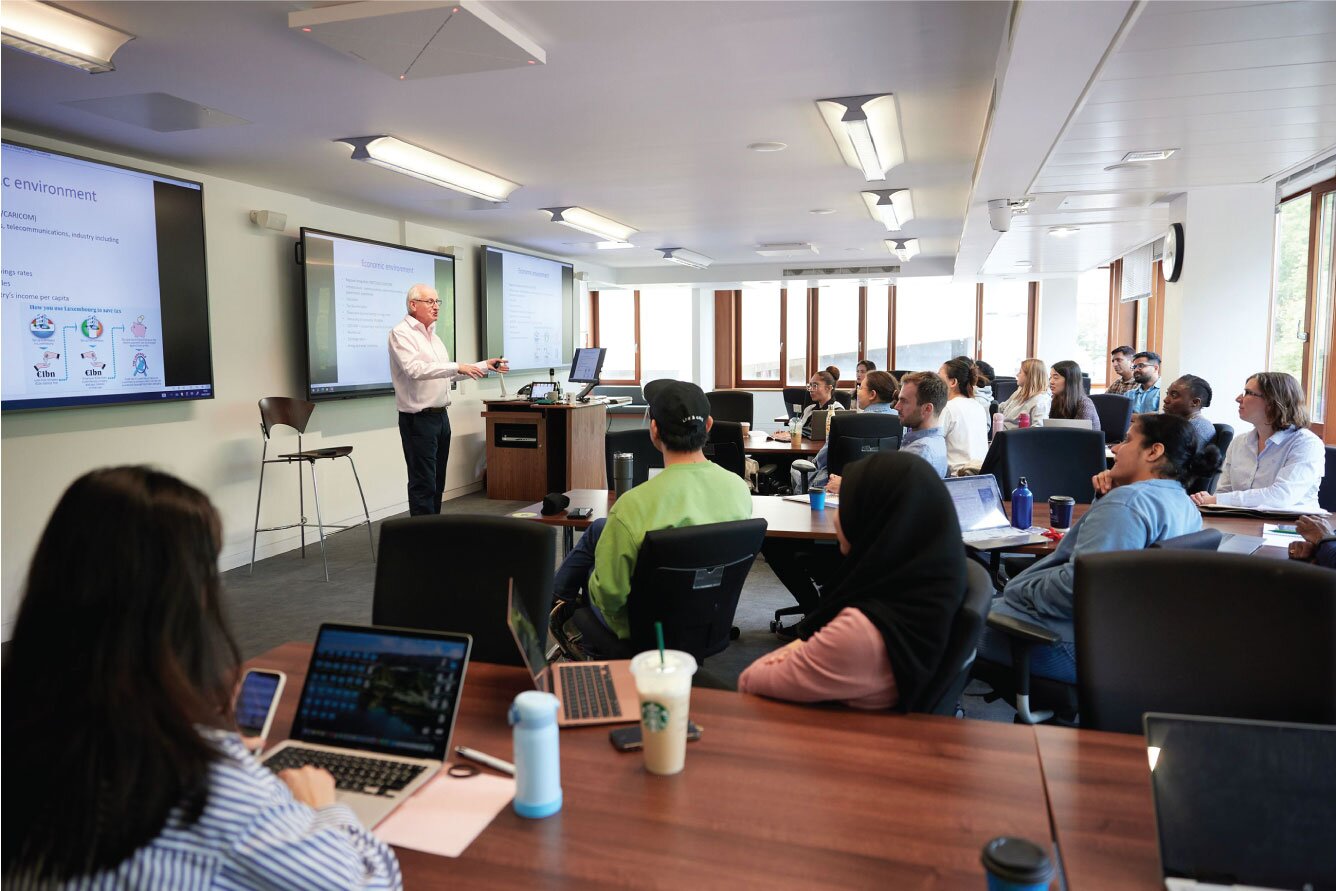
Classes will be held in the MBA Suite on the 1st floor of the University of Edinburgh Business School building, which offers views over the George Square Gardens. The adjoining foyer area will be used for daytime refreshments and the ground floor concourse for lunch breaks.
WELCOME DRINKS RECEPTION
SUNDAY, 6 SEPTEMBER 2026
This will be held in the Calton Suite of the Glasshouse Hotel. Situated atop the hotel’s two-acre roof-top garden, participants will be able to enjoy a stunning view of Edinburgh’s Calton Hill. Built from a former chapel constructed in 1846, the Glasshouse Hotel is part of the YTL Luxury Hotels collection - the hospitality arm of one of Malaysia's most dynamic conglomerates, YTL Corporation Berhad.
CEILIDH WORKSHOP & WELCOME DINNER
MONDAY, 7 SEPTEMBER 2026
Located near the historic Grassmarket, Greyfriars Hall at the Virgin Hotel will be the venue for your Welcome Dinner. This beautiful venue, housed in a building dating back to 1861, combines Gothic Revival architecture with contemporary design, providing a unique atmosphere for the welcome event.

Prior to dinner, participants will be led through the traditional Scottish group dance called Ceilidh by an experienced Highland dancer, accompanied by an accordion player.
FAREWELL DINNER
THURSDAY, 10 SEPTEMBER 2026
The prestigious National Museum of Scotland, a world-class institution exploring Scottish history, nature, culture and science, is where your Farewell Dinner will take place. With its floor-to-ceiling windows, the dining space offers an unrivalled view of the castle and the roof tops of Edinburgh’s Old Town.
Accommodation
Accommodation will be provided in single occupancy rooms from 6 – 12 September 2026 at the 4-star Radisson Blu Edinburgh City Centre Hotel on the Royal Mile. The hotel is well located, just 15 minutes from the University of Edinburgh Business School and 30 minutes from Edinburgh Airport by car/taxi. On foot, Princes Street, Waverley Train Station and the Edinburgh Airport bus and tram stop ‘St Andrew Square’ can be reached in less than 10 minutes' walk.

Radisson Blu Hotel, Edinburgh City Centre
The Royal Mile, 80 High St, Edinburgh EH1 1TH, United Kingdom
Note: All information on this page is correct but may be subject to change.
SHARE
Other programmes
Invest in a lifelong learning journey
As the industry’s preferred partner in learning and development, ABS offers customised and open enrolment training programmes that cover a comprehensive list of banking areas.
Emerging Banking Leaders Programme Director
Dr Fernando Moreira
Senior Lecturer (Associate Professor) in Banking and MSc Management Director, University of Edinburgh
Fernando acted as the director of the MSc in Banking and Risk from 2015 to 2017. He sits on the Quality and Standards Committee of the Chartered Banker Institute. His research interests are related to the impact of government interventions (including financial regulation) on a number of issues (e.g., financial stability and banks’ risk-taking) and to methodological approaches to assess causality. He teaches banking-related issues (which include applications of technology in banking) and econometrics. Fernando has published in peer-reviewed journals and presented papers at several conferences. He holds a PhD in Management Science and Business Economics from the University of Edinburgh and has previously worked at Keele University (UK) as a Lecturer in Finance and at the Central Bank of Brazil (Supervision Department).
Professor Ben Marder
Personal Chair in Digital Marketing and Consumer Behaviour and Director of PGR Programmes, University of Edinburgh Business School
Ben Marder is Professor in Digital Marketing and Consumer Behaviour and Director of Postgraduate Research Programmes at the University of Edinburgh Business School. His research interest surrounds social and commercial consumer behaviour linked to the use of digital technologies (social media). Since 2015, he has had 45+ articles accepted at well-known journals, such as the Journal of Retailing, Journal of Advertising Research, European Journal of Marketing, Industrial Marketing Management, International Marketing Review, Computers in Human Behavior, Journal of Travel Research, New Technology, Work and Employment, Journal of Health Psychology, and the Journal of Business Research. This work has received quite a lot of media attention, including The New York Times, Cosmopolitan, Harvard Business Review and the BBC.
Dr Yizhe Dong
Personal Chair of Banking and Risk Analytics, University of Edinburgh Business School
Yizhe Dong is a Professor (Personal Chair) in Banking and Risk Analytics at the University of Edinburgh Business School. His research interests lie in AI/ML/LLM applications in Finance, corporate finance and governance, credit risk assessment, climate risk and green finance, banking and financial institutions, Fintech and textual analysis. He has published more than 30 papers in leading journals. Prof Dong is currently serving as a Joint Editor of the Journal of Chinese Economic and Business Studies, Associate Editor of the European Journal of Finance and vice president of the Chinese Economic Association (UK/Europe).
Dr Richard Jones
Senior Lecturer in Criminology, School of Law, University of Edinburgh
Dr Richard Jones is a Senior Lecturer in Criminology at the School of Law, University of Edinburgh. He is an expert in topics including cybercrime, cyber security, surveillance and crime prevention. He obtained his PhD in Criminology from the University of Cambridge, has been a Visiting Academic at the University of Oxford, and has served as a member of the Editorial Boards both of the British Journal of Criminology and the European Journal of Criminology. He is an Expert Fellow of the UK’s Security, Privacy, Identity and Trust in the Digital Economy network, and is currently involved in cyber security projects researching new ways of keeping vulnerable users safe online and scoping potential cyber risks introduced by smart products.
Dr Mark Sprevak
Senior Lecturer (Associate Professor) in Philosophy at the School of Philosophy, Psychology and Language Sciences, University of Edinburgh
Dr Mark Sprevak is Senior Lecturer in Philosophy at the School of Philosophy, Psychology and Language Sciences at the University of Edinburgh. His primary research interests are in philosophy of mind, philosophy of science, and artificial intelligence. He has published on the foundations of computational models of human cognition, distributed cognition, as well as on the history of computational models.
Dr Tong Wang
Senior Lecturer in Business Economics, University of Edinburgh Business School
Dr. Tong Wang serves as a Senior Lecturer and a Generative AI laboratory fellow at the University of Edinburgh. He is a PhD graduate from the Toulouse School of Economics and has a keen interest in the dynamic fields of Fintech and Digital Economics. Dr. Wang's research is well-recognized, featured in top-tier international journals such as the Journal of Economic Theory and Journal of Industrial Economics. He has also expanded his influence through his book, "History in Economics", which has been published in three languages. As a dedicated educator and researcher, he currently leads initiatives exploring the implications of generative AI for digital markets and platform economics, bridging traditional economic theory with contemporary technological developments.
Val Smith
Head of Authorisations, Payments and Digital Assets, Financial Conduct Authority (FCA)
Val is an experienced regulator who has worked with new financial services firms for the last ten years, focusing on banking, insurance, payments and now digital assets. Val helped design and implement the New Bank Start Up Unit, a joint endeavour between the FCA and Prudential that changed the way in which new banks come to market. During her career, she has led a number of regulatory change programmes and led the work on the UK’s Temporary Permissions Regime to transition the formerly passported EEA firms into the UK, providing continuity and certainty to their UK customers. More recently Val has overseen the transition of cryptoasset firms into the world of regulation. Val lives in the north-east of Scotland and is one of the co-heads of the FCA’s Scotland Office.
Su Crighton
Partner, KPMG
Su is an experienced digital leader with a track record of successfully delivering complex technology and transformation initiatives. She specialises in technology value management and leads the KPMG UK FinOps capability. Su has 30 years’ experience in multiple industry sectors including Financial Services, Travel & Tourism, Charity, Telecoms and Public Sector. She has held senior and executive leadership positions building productive engineering teams and advising business stakeholders on technology adoption.y

Recent deliveries include: UK Major retailer – led an initiative to reduce cloud spend and establish ongoing FinOps capability, Global FMCG – led an initiative to review and improve cloud approach, advising on strategy, operating model and optimization opportunities, UK media & news group – led technology recovery following a serious cyber-attack, supporting development of a technology transformation programme and acting as strategic technology advisor to the board, leading Brand & Insights global organisation – led an initiative to identify significant cloud cost savings and designed Cloud CoE to drive ongoing value realisation.
Kate Ramsay
Senior Manager, KPMG
Kate Ramsay has over 25 years of IT delivery experience within Financial Services, her experience within Retail Banking spans Infrastructure Delivery, Lean Management, Assurance Roles, and Programme Delivery. Kate has led a strategic review of a Core Banking Legacy Estate and Approach for a major UK Retail Bank, aligning senior business and technology stakeholders to ensure an agreed roadmap and approach. Having enjoyed working at a strategic level Kate made the switch to Consultancy and has moved from Banking to join KPMG’s Cloud Practice as a Senior Manager, bringing her extensive Industry experience to support Clients in their Cloud Adoption Journey.
Marilena Karanika
Head of Data Innovation, Experian
Marilena Karanika is the Head of Data Innovation at Experian, providing data and analytics support across different product domains such as affordability, credit risk and insurance. With more than 10 years of experience in Credit Risk Modelling and Analytics in financial services, a key area of her expertise is enabling organisations to make better use of data, reach more informed decisions and support consumers throughout the customer lifecycle. In the recent years, Marilena and her team created and launched products utilizing Open Banking and own-bank transactional data to help organisations understand the impact of events such as Cost of Living crisis and COVID on their portfolios and support their customers accordingly. Marilena is passionate about the power of financial education and works with universities and professional bodies to deliver guest lectures and industry talks promoting a better and wider understanding of analytics in financial services. She has been voted Innovator of the Year 2021 in the Women in Credit Awards.
Professor Alexandra (Lexi) Birch
Co-founder and Chief Scientist of Aveni.ai and Professor of Multilingual Natural Language Processing at the School of Informatics, University of Edinburgh
Lexi is co-founder and Chief Scientist of Aveni.ai, a leading fintech company delivering GenAI solutions to the UK finance sector and currently involved in a large language model project with Lloyds and Nationwide. As a Professor at the School of Informatics of the University of Edinburgh, Lexi’s main area of research has been multilingual natural language processing (NLP). Her research has resulted in over 100 peer reviewed publications including not only natural language processing but also topics such as ethics, explainability and efficiency. Her research has had significant impact and has contributed to the paradigm shift towards neural networks and large language models.
Gordon Johnstone
Project Manager: AI Literacy Challenge, Edinburgh Futures Institute
Gordon is a communications professional with over a decade of experience in delivering strategies, events, and innovation. He is currently working in AI literacy and AI ethics at the Edinburgh Futures Institute. Prior to this he was an integral member of the Scottish AI Alliance and helped to deliver Scotland’s original AI strategy.
Guy Jubb
Honorary Professor, University of Edinburgh Business School
Guy has had an influential career in accounting, auditing, and investment, with a focus on governance and stewardship. He was part of the leadership team at Standard Life Investments, a leading active institutional investor, for 30 years until he stepped down as Global Head of Governance & Stewardship in 2016. During his tenure, he played a key role in the development of regulation and best practices while being recognized as a thought leader. He has served on numerous committees, including the Investment Committee of the Association of British Insurers (ABI), the Companies Committee of the Confederation of British Industry (CBI), and the Council of the Institute of Chartered Accountants of Scotland (ICAS). Since 2017, he has been an Honorary Professor at the University and is also a Director at the Brussels-based European Corporate Governance Institute, which facilitates policy impact for governance research by prominent academics.
Dr Sean Harkin
Data Science and AI Lead, Lloyds Banking Group
Sean leads the delivery of cutting-edge Generative AI and predictive machine learning solutions for improving customer journeys in key long-term products. He previously led machine learning in a FinTech startup and another UK bank, and has eighteen years’ experience in the UK financial sector across a range of data science, analytics, and risk roles. He works with top level stakeholders in defining AI and ML strategy, and is experienced in building and deploying machine learning models across a range of programming languages and technology environments. He holds a PhD in applied statistical modelling.
Ravi Saxena
Retired Career Transaction Banker, Citibank
Ravi worked in the banking sector for three decades [1991 - 2020] across Asia, Europe and North America. He was a member of the ‘Citibank Treasury and Trade Global Executive Committee’ and ‘Citibank Japan Executive Committee’ [2014-2018]. He is presently based in Edinburgh. Ravi has strong interest and motivation related to Training, Learning and Development. He has been a Visiting Professor at the Indian Institute of Management Ahmedabad, India and a Guest Lecturer at the Stirling Management School, Scotland. His educational background involves a B. Tech in Electronics Engineering from IIT BHU, Varanasi and an MBA from IIM Ahmedabad, India.
Dr Jón Egilsson
Co-founder & Head of Strategic Partnerships, Monerium
Jón is the co-founder of Monerium, the first company to issue licensed fiat currencies as stablecoins. He is the former chairman of the supervisory board of the Icelandic Central Bank. In addition to co-founding four software companies, Jón is also an Executive Fellow at King's College London and a Forbes contributor on Digital Assets. He is a former visiting scholar at Columbia University in New York, former adjunct professor in financial engineering at Reykjavik University, former lecturer at the University of Iceland in economics and engineering.

Between 2004 and 2008 he was the CEO of Klak Innovation Center where he initiated Seed Forum Iceland and subsequently managed Seed Forum USA, operating in New York, Minneapolis, and Palo Alto. He holds a Ph.D. degree in Economics and a master's degree in Engineering.
Sunday, 6 September 2026
Programme at a glance
Arrival in Edinburgh
Guided Tour of Edinburgh’s Old Town. Followed by Welcome Drinks
Free Time
Programme OUTLINE
Pre-Programme: Walking Tour of Edinburgh & Welcome Drinks
A guided walking tour in the afternoon will take you from your hotel around the city’s old town. This will be followed by a Welcome Drinks Reception on the rooftop of the Glasshouse Hotel.
Monday, 7 September 2026
Programme at a glance
Introduction and Programme Overview
The C-Suite Perspective and the Technology Priorities
Lunch
Open Banking: From Concept to Reality – Lessons from the UK Experience
The Use of Technology in the Engagement with Customers
Welcome Dinner
Programme OUTLINE
Morning Session:
Introduction and Programme Overview
Learning Objective: Understand the programme structure and gain a broad overview of the key issues covered in the programme
In this session, we will welcome participants and will explain how the programme is organised. This session includes information on the key topics to be discussed over the week and the activities we have prepared. The primary goal will be to set the scene for helping participants make the most of the programme.
The C-Suite Perspective and the Technology Priorities
Learning Objective: Develop an understanding of the priorities of the C-Suite Personnel when managing the Technology Agenda of banks
In this session, participants shall put themselves in the shoes of the CEO of the Bank, so as to develop an understanding and appreciation of the top of house goals and objectives, which need to percolate within the organisation. In light of this, we will subsequently develop, brainstorm and discuss the key components of the technology priorities within the bank and its business and operating units.
Afternoon Session:
Open Banking: From Concept to Reality – Lessons from the UK Experience
Learning Objective: Gain a deep understanding of how Open Banking can fuel innovation, enhance customer experience, and foster collaboration between banks and third-party providers
This session will cover the fundamental principles of Open Banking and explore its potential for transforming financial services. It will include successful case studies from the UK’s advanced Open Banking ecosystem and discuss the benefits and potential impacts on the banking industry and the consumers.
The Use of Technology in the Engagement with Customers
Learning Objective: Build awareness of applications of technology to strengthen customer relationships
More and more customers interact with financial institutions by means of digital tools. These interactions include not only financial transactions but also requests for information and comments on the quality of the services provided. This scenario has created opportunities for personalised and swift services, which have become core customer expectation. In this session, we will introduce and discuss some of the key tools (e.g., social media, online reviews, AI service assistants) that can strengthen the connection between banks and their customers while allowing the former to better understand the needs of the latter.
Tuesday, 8 September 2026
Programme at a glance
Finance and Cyber Security: Emerging Threats, Challenges and Solutions
Financial Regulation and Technology
Lunch
Cloud Transformation in Financial Services
Practical Session (Hackathon): Finding Solutions to Actual Problems Faced by Banks
Free Time
Programme OUTLINE
Morning Session:
Finance and Cyber Security: Emerging threats, challenges and solutions
Learning Objective: Learn how the cyber threat landscape is currently evolving, how this may impact the financial sector, and identify potential solutions
Cybercrime and cyber threats are constantly evolving, with threat actors ranging from petty fraudsters, to organised cybercriminal gangs, terrorist groups, and hostile nation states. The finance sector and its customers may be targeted by these actors for a variety of reasons, including financial gain, corporate espionage or geopolitical strategic purposes. Issues involved range from customer fraud, insider threats, regulatory compliance, reputational risk, AI, ransomware, and weak encryption. This session will explore some emerging threats, organisational challenges, and possible future cyber security solutions.
Financial Regulation and Technology
Learning Objective: Develop awareness of the actions taken by regulations in response to the use of technology in the financial sector
Regulation is one of the aspects impacted by technological innovations in the financial sector. This session will cover the responses of regulators to prevent negative effects of technological innovations on the customers of financial firms, providing examples related to the UK market. The trends in financial regulation given the advances in technology will also be discussed.
Afternoon Session:
Cloud Transformation in Financial Services
Learning Objective: Raise awareness about the benefits and risks of Cloud adoption

The remote access to technology services (Cloud) such as data storage or computing power can contribute to the increase of profitability and the improvement in customer experience. This session will explain the role of Cloud services in supporting Business outcomes and will show how digital transformation can be enabled through Cloud adoption. Then, the speakers will discuss innovative ways Cloud can deliver existing services and access new capabilities with improved cadence and agility. While the session will focus on the benefits of Cloud computing, its risks will also be addressed.

Practical Session (Hackathon): Finding Solutions to Actual Problems Faced by Banks
Learning Objective: Bridge the gap between theoretical concepts and practical applications regarding Cloud transformation

In this hands-on session, you will have the opportunity to act as consultant and propose solutions to actual problems faced by banks in terms of implementing Cloud initiatives. Your ideas will be discussed with experienced consultants and other participants in the programme.


Wednesday, 9 September 2026
Programme at a glance
Ethics of AI
Ethical Frameworks for AI tools
Lunch
Visit to a financial institution
Free Time
Programme OUTLINE
Morning Session:
Ethics of AI
Learning Objective: Understand foundational issues in design and deployment of AI systems in automated decision making
AI systems are increasingly used to aid decision making. AI decision-making systems offer opportunities for greater efficiency, accuracy, and reduction in human-based cognitive biases. However, these systems also raise serious worries: their outputs are not always easy to understand or justify, they can fail to be accurate in ways that are hard to anticipate, and they may systematically introduce discriminatory considerations into decision making. In this session, we will consider some of the challenges facing the design and deployment of AI systems in decision making and the difficulties of rendering future decision making fair and transparent.
Ethical Frameworks for AI tools
Learning Objective: Identify recent innovations in payment systems and appropriate responses by banks
This session will discuss the importance of ethical frameworks when developing or deploying AI tools. This will cover futureproofing banks’ plans, ensuring inclusion and diversity, and staying ahead of regulations. Discussions with the group will be promoted.
Afternoon Session:
Visit to Financial Institution
Talks on banking innovations and network session with UK practitioners.
Thursday, 10 September 2026
Programme at a glance
Stablecoins and their impact on the banking system
Blockchain Applications in Corporate Governance and Banking
Lunch
Transforming Insurance Underwriting Through Evidence Summarisation and Intelligent Decision Recommendation
Applications of Large Language Models in Banking Risk Analytics
Farewell Dinner
Programme OUTLINE
Morning Session:
Stablecoins and their impact on the banking system
Learning Objective: Understand how stablecoins are integrated into the financial ecosystem and assess their impacts on traditional banking operations
As digital assets anchored by less volatile reserves (e.g., fiat currencies), stablecoins are revolutionising financial transactions, settlements, store of funds and programmability, due to their technical features and stability. The intrinsic connections between financial transactions and traditional banking operations, based on stablecoins in the banking system, are becoming increasingly evident. While this presents opportunities for innovation, it may also involve challenges due to funding and the removal of banks as intermediaries. This interactive session will provide an overview of stablecoins, explore current trends in the area, and discuss potential consequences for banks.
Blockchain Applications in Corporate Governance and Banking
Learning Objective: Understand the potential of blockchain technology in enhancing corporate governance practices within the banking sector
Blockchain technology has emerged as a strong force in the financial industry, offering the ability to validate information automatically while maintaining the confidentiality of data. Key stakeholders in the financial industry, including regulators and central banks, are actively investing in this innovative technology. This session aims to provide a comprehensive overview of the role and implications of blockchain within the context of banking and finance. Participants will be introduced to the essential technical concepts of blockchain and their real-world applications. The session will further explore the potential impact of blockchain on the existing framework of financial services, corporate governance structures, and regulatory environments.
Afternoon Session:
Transforming Insurance Underwriting Through Evidence Summarisation and Intelligence Decision Recommendation
Learning Objective: Understand, in practical terms, what it takes to design, validate, and deploy production grade evidence summarisation and decision recommendation systems in a highly regulated environment
Underwriting in life and health insurance involves analysing extensive medical documentation which is often unstructured and voluminous. Human assessors must extract pertinent clinical data, identify undisclosed information, and justify their decisions using underwriting manuals. The LBG insurance team addresses these complexities through the Evidence Summariser and Decision Recommender solutions. The Evidence Summariser utilises a large language model pipeline, enhanced by a bespoke medical ontology, to swiftly convert medical texts into structured, accountable summaries, significantly cutting down processing time. Following this, the Decision Recommender aligns these summaries with manual rules to propose draft decisions on insurance outcomes, thereby enhancing consistency and speeding up the decision-making process. Deploying such AI solutions, however, demands thorough attention to data privacy, model validation, and integration with existing systems, alongside a cultural shift towards trust in AI-driven processes.
Applications of Large Language Models in Banking Risk Analytics
Learning Objective: Gain a comprehensive understanding of the transformative potential of LLMs in enhancing risk analytics practices within the banking industry
The financial industry is witnessing an emerging trend of Large Language Models (LLMs) applications to enhance operation and risk management. This lecture is designed to explore the integration of large language models (LLMs) into the field of banking risk analytics. We will cover key areas such as the current development of LLMs applications within the financial service industry, basic principles of LLMs, and associated ethical and regulatory issues. Additionally, the session will feature case studies involving real-world data sets to demonstrate how LLMs are applied in credit risk assessment, offering insights into their practical benefits.
Friday, 11 September 2026
Programme at a glance
Case Studies on the use of Financial Technology
Knowledge Sharing and Integration of Learning
Lunch
Knowledge Sharing and Integration of Learnings: Group presentations
Certificate Ceremony
Free Time
Programme OUTLINE
Morning Session:
Case Studies on the use of Financial Technology
Learning Objective: Enhance participants’ ability to evaluate actions taken by institutions and decide whether such actions could be applied to their own organisations
This session will make use of case studies to stimulate discussions among participants and personal reflections about challenging situations faced by financial institutions from different countries in the context of the previous sessions in the programme. At first, the participants will discuss the cases in groups. Then, the facilitator will present the solutions adopted by the institutions described in the cases. Next, the whole class and the facilitator will discuss the pros and cons of possible solutions to the cases. To conclude, the participants will be asked to build a link between the cases analysed and specific challenges faced by them in their own institutions.
Knowledge Sharing and Integration of Learnings
Learning Objective: Make connections between the topics seen in different sessions of the programme and identify their applications in participants’ jobs
This session will be focused on facilitated group discussions to share reflections of the participants based on the topics seen in the programme. This will allow participants to review the knowledge acquired over the week and connect pieces of information even when they do not seem to be related to each other. We will also consider possible scenarios and changes brought about by new technologies that may affect the banking industry.
Afternoon Session:
Knowledge Sharing and Integration of Learnings: Group Presentations
Learning Objective: Evaluate the practical application of technological advances proposed in the group presentations and refine the ideas in light of potential challenges
Building on the previous session, each group will present their conclusions to the rest of the class. Then, a facilitated discussion among the groups will focus on perspectives or experiences that may not have emerged in the within-group discussions due to the specific profiles of participants in each group.
Asian Banking School Logo
The Asian Banking School (ABS) is dedicated to developing talent and is the largest specialised provider of quality banking training programmes in the ASEAN region.
Copyright © Asian Banking School (ABS) (201201039737 (1024215-T)). All rights reserved.
There are currently no upcoming programme slots.
Please email us here or call us at +603 2701 7822 if you want to check on future slots.


 | 
Asian Banking School
Emerging Banking Leaders Programme
Time Slot
PAX No
Programme Fees


Note ON CURRENCY CONVERSION in IPAY88 Payment Gateway
Please take note that this amount will be reflected in Malaysian Ringgit (MYR) in the iPay88 Payment Gateway based on the daily foreign currency exchange rate.
Note for offline payment Method
Kindly download the Payment Form here for our banking details and if making company sponsored payments. You are required to upload this form to complete the registration process.
Programme added to cart successfully.

Please proceed to your cart to enter participant details and complete payment.

Text
Note for offline payment Method
Kindly download the Payment Form here for our banking details and if making company sponsored payments. You are required to upload this form to complete the registration process.
Failed to add programme to cart.

Please refresh the page and try again.

Ooops!
Generic Popup2